

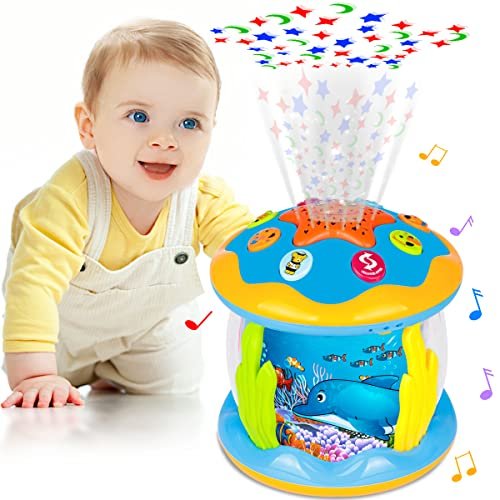
Choosing baby toys sounds simple until you stand in front of a shelf filled with rattles, teethers, sensory toys, activity gyms, stacking cups, musical gadgets, and stuffed animals.
The good news is that babies do not need a room full of toys. The most useful choices are usually simple, age-appropriate, easy to grasp, and interesting enough to encourage a Baby Toys to look, reach, move, explore, and interact.
Safety matters just as much as entertainment. Babies explore with their mouths, so small parts, loose components, button batteries, and powerful magnets deserve particular attention. The American Academy of Pediatrics recommends following age guidance, avoiding small detachable parts, and keeping button batteries and high-powered magnets away from young children.
What Makes a Good Baby Toy?
A good baby toy does more than make noise or light up. It gives a child something appropriate to explore.
For a young baby, that might mean a high-contrast toy that encourages visual attention or a lightweight rattle that is easy to hold. As babies become more mobile, toys that encourage reaching, grasping, transferring objects between hands, crawling, or simple problem-solving become more useful.
The best toy is also one that matches the baby’s current abilities. A toy designed for an older child may be perfectly safe for that age group but inappropriate for a younger baby.
Age recommendations are therefore more than marketing suggestions. They can reflect potential choking hazards as well as the physical and cognitive abilities needed to use a toy safely.
Baby Toys by Age and Developmental Stage
Newborn to 3 Months
Newborns spend much of their time observing the world, gradually becoming better at focusing their eyes and controlling their movements.
Useful toys at this stage include:
- High-contrast cards or soft visual toys
- Lightweight rattles
- Simple soft toys with securely attached features
- Baby-safe mirrors designed for supervised use
- A play mat with interesting textures or visual elements
You do not need elaborate electronic toys. A simple object that catches your baby’s attention can provide plenty of opportunity for looking, listening, and beginning to track movement.
At this age, your face and voice are also powerful sources of stimulation. Talking, singing, smiling, and making eye contact can be part of play without requiring another product.
3 to 6 Months
Babies generally become more active during this period. They may begin reaching deliberately, grabbing objects, bringing toys to their mouths, and rolling.
Good options include:
- Easy-to-grip rattles
- Textured teethers
- Soft crinkle toys
- Activity mats
- Baby-safe mirrors
- Toys that can be grasped with one or both hands
Look closely at construction. If a toy has stitched eyes, buttons, ribbons, or other attached pieces, make sure they are secure and inspect the toy regularly for damage.
Because mouthing is normal at this stage, anything within reach should be designed for babies and free from detachable small pieces.
6 to 9 Months
As babies sit, roll, reach, and begin moving around, toys can encourage more active exploration.
Consider:
- Stacking cups
- Large soft blocks
- Simple cause-and-effect toys
- Textured balls that are large enough to be safe
- Activity cubes designed for the appropriate age
- Toys that encourage reaching and crawling
A toy does not have to perform several functions to be valuable. A set of large cups, for example, can become objects to grasp, stack, knock over, transfer, and eventually use during water play.
9 to 12 Months
Older babies often enjoy toys that involve a little more problem-solving and movement.
Examples include:
- Large stacking toys
- Simple shape-sorters designed for the appropriate age
- Push-and-pull toys suitable for the child’s developmental stage
- Large blocks
- Containers for putting objects in and taking them out
- Simple musical instruments made for babies
At this stage, pay attention to how your particular child uses the toy. Development does not happen on an exact timetable, and a toy that fascinates one Baby Toys may barely interest another.
12 Months and Beyond
Once a child becomes a toddler, play can become more imaginative and physically active.
Age-appropriate choices may include:
- Large building blocks
- Simple puzzles with large pieces
- Pretend-play objects
- Chunky crayons and washable art materials when appropriate
- Balls that are large enough for the child’s age
- Ride-on or push toys designed for toddlers
Continue checking age labels. A household with an older sibling can create an additional safety issue because toys containing small pieces may be perfectly suitable for the older child but dangerous for a younger baby.
The Main Benefits of Baby Toys
Toys are not a replacement for interaction, but thoughtfully chosen toys can give babies useful opportunities to practice emerging skills.
Fine-Motor Practice
Grasping, holding, transferring, squeezing, and manipulating toys help babies practice hand and finger movements.
A lightweight rattle may be useful simply because a Baby Toys can successfully hold it. Later, stacking cups or large blocks provide more opportunities to manipulate objects.
Sensory Exploration
Babies learn through their senses. Different textures, shapes, sounds, colors, and weights can give them new things to investigate.
This does not mean a toy needs flashing lights and multiple sound effects. A textured teether or crinkle toy can provide sensory interest without overwhelming the child.
Movement
Some toys encourage babies to reach, roll, crawl, sit, stand, or walk.
Place an interesting but safe toy slightly beyond a baby’s immediate reach during supervised floor play, for example, and the child may be motivated to move toward it.
The goal is not to force a milestone. It is simply to create opportunities for natural movement and exploration.
Early Problem-Solving
Simple toys can introduce the idea that actions have consequences.
A Baby Toys presses something and hears a sound. A cup gets turned upside down. A block falls when it is pushed. An object disappears into a container and comes back out.
These small discoveries are part of learning how objects and actions relate to one another.
Social and Language Development
Some of the best “toy time” involves an adult.
Talk about what the Baby Toys is holding. Copy the sounds they make. Take turns rolling a large ball. Name colors, shapes, animals, or actions.
The toy provides something to interact with, while the adult provides conversation, attention, and social connection.
How to Choose Safe Baby Toys
Safety should be considered before appearance, price, or novelty.
1. Check the Age Recommendation
Start with the manufacturer’s recommended age range. Then consider whether the toy actually matches your child’s abilities.
A toy marked for an older age should not be given to a younger Baby Toys simply because the child seems interested in it.
2. Look for Small or Detachable Parts
Babies naturally put objects in their mouths. Avoid toys with small parts that can detach and become choking hazards.
The CPSC specifically advises keeping small balls and toys with small parts away from children under 3, while its toy-safety rules include requirements concerning small parts and choking-hazard labeling.
3. Inspect Toys Regularly
A toy that was safe when purchased can become unsafe if it breaks.
Check for:
- Cracked plastic
- Loose seams
- Detached pieces
- Frayed fabric
- Loose ribbons or strings
- Damaged battery compartments
- Sharp edges
If a toy is damaged and cannot be safely repaired, remove it.
4. Be Careful With Button Batteries
Electronic toys deserve extra scrutiny because some contain button or coin batteries.
These batteries can cause severe internal injuries if swallowed. The CPSC warns that a swallowed button cell or coin battery can burn through tissue in as little as two hours.
Battery compartments should be securely closed. If a compartment is damaged or a battery becomes accessible, stop using the product until it is made safe.
5. Avoid High-Powered Magnets
High-powered magnets can cause serious injuries if swallowed. The American Academy of Pediatrics and CPSC both advise keeping these products away from young children.
Do not assume that a toy is safe simply because it is marketed to children. Check its construction and intended age range.
6. Keep Crib Toys Out of Reach
A toy that is suitable for supervised floor play may not belong in a baby’s sleep space.
The AAP advises that hanging crib toys should remain out of a baby’s reach and be removed when the Baby Toys begins pushing up on their hands and knees or reaches 5 months, whichever comes first.
Common Baby Toy Mistakes
Buying for the Child You Expect Instead of the Child You Have
Parents sometimes buy toys based on a developmental stage they expect to arrive soon.
A better approach is to buy for the baby’s current abilities, with a small amount of room to grow.
Choosing Complexity Over Usefulness
A toy with lights, sounds, buttons, screens, and multiple modes may look impressive, but complexity does not automatically make it more useful.
Simple toys can support open-ended play because the child has to decide what to do with them.
Ignoring the Rest of the Household
A toy may be safe for a preschooler but unsafe around a crawling baby.
If older children have small construction pieces, marbles, magnets, or other tiny objects, establish a separate play area and make sure those items are stored away after use.
Leaving Toys in the Crib
A Baby Toys may enjoy a toy during supervised play but should not automatically have access to it during sleep.
Keep the sleep environment free from toys and other objects that could create an entrapment, suffocation, or strangulation risk.
Keeping Toys That Have Been Recalled
Check recall information periodically, particularly for toys purchased secondhand or received as gifts.
If a toy has been recalled for a safety problem, follow the recall instructions and remove it from use.
How Many Baby Toys Do You Actually Need?
Probably fewer than you think.
A small collection can cover several types of play:
- Something to grasp — such as a lightweight rattle.
- Something to mouth safely — such as an age-appropriate teether.
- Something to explore visually — such as a high-contrast toy or baby-safe mirror.
- Something to manipulate — such as stacking cups or large blocks.
- Something for movement — such as a large ball or age-appropriate activity toy.
- Something for shared play — such as a simple book or toy that encourages turn-taking.
Rotating a few toys instead of leaving everything available at once can also make familiar toys feel interesting again. You do not need to keep buying new products to create new play opportunities.
What About Educational Baby Toys?
The word “educational” can be useful, but it is also a marketing term.
A toy does not need to promise a specific academic outcome to be worthwhile. For babies, ordinary actions such as grasping, reaching, looking, listening, moving, and interacting with caregivers are already meaningful forms of learning.
The AAP also emphasizes that no particular toy is necessary for a child to reach a developmental milestone.
Instead of asking, “Will this toy make my Baby Toys smarter?” ask:
What can my baby safely do with it?
If the answer includes several possibilities—grasp it, shake it, look at it, move toward it, stack it, fill it, empty it, or share it with a caregiver—the toy may have plenty of value.
Expert Tips for Buying Baby Toys
Prioritize open-ended play. A toy that can be used in several ways often stays interesting longer than one with a single programmed response.
Choose durable construction. Babies drop, chew, pull, and throw things. A toy needs to tolerate ordinary use without breaking into hazardous pieces.
Think about cleaning. Toys that regularly go into a baby’s mouth should be easy to wash according to the manufacturer’s instructions.
Read the packaging before buying. Look beyond the front of the box and check age recommendations, warnings, materials, and battery information.
Inspect secondhand toys carefully. Older toys may have missing parts, damaged components, outdated safety features, or recall histories that are difficult to identify at a glance.
Remember that supervision is part of toy safety. Supervision does not make an unsafe toy safe, but appropriate supervision helps adults notice how a child is using a toy and whether the toy has become damaged.
Frequently Asked Questions About Baby Toys
What are the best baby toys for a newborn?
Simple toys that encourage looking, listening, and gentle interaction are usually appropriate, such as high-contrast visual toys, lightweight rattles, soft toys with securely attached parts, and supervised baby-safe mirrors.
When should babies start using toys?
Babies can interact with simple, age-appropriate toys from birth. Early play may involve looking at a toy, listening to a caregiver, or briefly grasping an object. As babies develop, their ways of interacting with toys become more active.
Are electronic toys good for babies?
They can be entertaining, but electronic features are not essential. Simple toys often give babies more opportunities for hands-on exploration and can encourage caregivers to participate in play.
Are stuffed animals safe for babies?
They can be appropriate during supervised play if they are well made and have securely attached parts. However, soft toys should not be left in a baby’s sleep space because of potential suffocation and other sleep-safety concerns.
What toys should babies avoid?
Avoid toys that contain accessible small parts, high-powered magnets, or accessible button or coin batteries. Also avoid damaged toys, toys with loose strings or ribbons, and products that are not appropriate for the child’s age.
Do babies need expensive toys?
No. A toy’s price does not determine whether it is useful. Safe, simple objects designed for babies can provide plenty of opportunities for grasping, movement, sensory exploration, and interaction.
How often should baby toys be replaced?
Replace a toy when it becomes damaged, develops loose parts, has an unsafe battery compartment, or is otherwise no longer safe for its intended use. You do not need to replace a toy simply because it is no longer new.
Should baby toys be sterilized?
Not every toy needs sterilizing. Follow the manufacturer’s cleaning instructions and clean toys regularly, especially those that babies frequently mouth. The appropriate cleaning method depends on the toy’s material and construction.
Final Thoughts
The best baby toys are not necessarily the newest, loudest, or most expensive. They are toys that fit the child’s stage, invite safe exploration, and hold up to real use.
Start with a few well-made basics. Watch what your Baby Toys enjoys doing with them, then add toys that support those emerging interests and abilities.
Most of all, remember that the toy is only part of play. Your voice, attention, facial expressions, and participation give even a very simple toy much more value.
Safety should always come first: check age recommendations, inspect toys for damage, keep small parts and magnets away from babies, and take button or coin batteries seriously.