

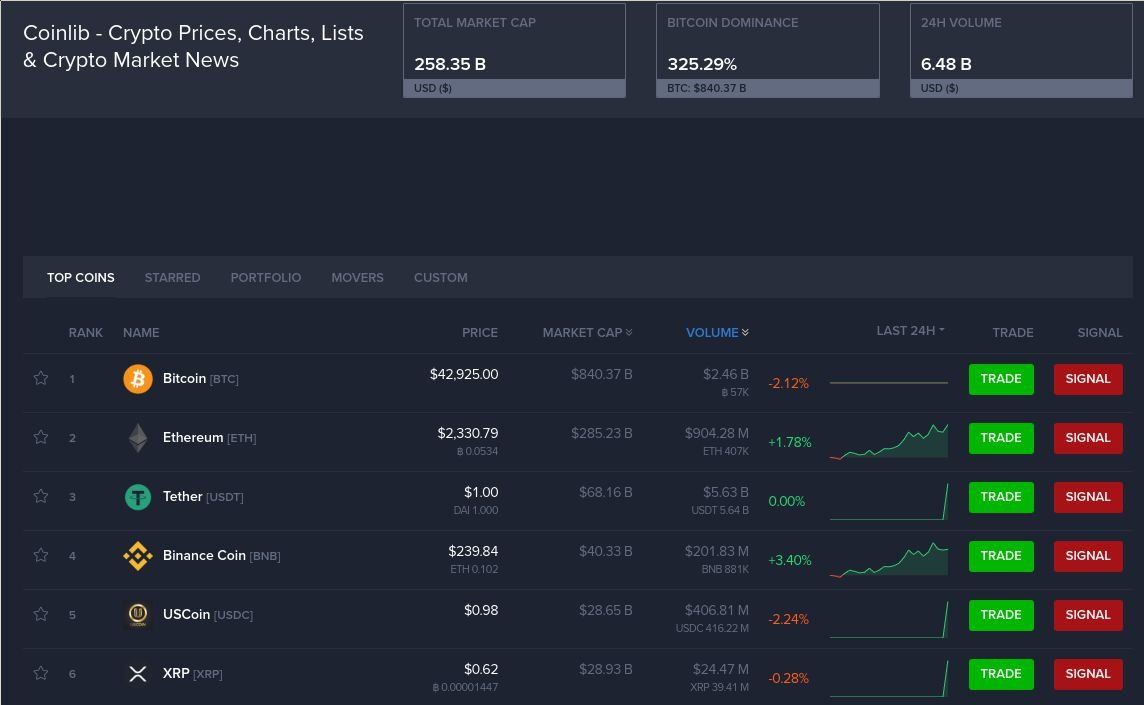
Crypto prices can change sharply within minutes, which makes the market both interesting and difficult to follow. A coin may rise several percent while another falls at the same time. News, investor sentiment, trading volume, market liquidity, regulations, and broader financial conditions can all influence what traders see on their screens.
But looking at a number such as “$100,000” or “$2.50” tells you very little by itself. To understand crypto prices, you need to know what that number represents, why it moves, and which other market indicators should be considered alongside it.
This guide explains how cryptocurrency pricing works, what causes prices to move, how to compare different assets, and how to avoid common mistakes when interpreting the market.
What Are Crypto Prices?
A crypto price is the current market value at which a cryptocurrency can be bought or sold on a particular exchange or trading platform.
Unlike a fixed retail price, a cryptocurrency’s quoted price is determined by supply and demand. Buyers submit orders to purchase an asset, while sellers offer it at prices they are willing to accept. When transactions occur, the market price changes.
For example, imagine a cryptocurrency trading around $500. If many buyers suddenly want the asset and sellers are unwilling to sell at the current price, buyers may begin accepting higher asking prices. The quoted market price can then rise.
The opposite can happen when selling pressure increases.
This is one reason Crypto Prices can move much faster than prices for many traditional assets.
Why Prices Can Differ Between Exchanges
You may notice that the same cryptocurrency has slightly different prices on different exchanges.
That happens because each trading platform has its own order book, participants, liquidity, fees, and trading activity. Arbitrage traders often take advantage of meaningful price differences, helping bring markets closer together.
Small differences are therefore normal. A quoted price should always be considered in the context of the exchange and trading pair being used.
Why Do Crypto Prices Change?
Several forces can move cryptocurrency markets. Rarely is there just one explanation.
Supply and Demand
Supply and demand remain the basic drivers.
If demand increases while the available supply remains relatively limited, buyers may compete for the asset and push its price higher. If more holders want to sell than buyers are willing to absorb, the price can fall.
The details vary between cryptocurrencies because their token supplies, issuance schedules, utility, and ownership structures are different.
Market Sentiment
Investor psychology has a major influence on short-term movements.
Positive sentiment can encourage traders to buy, while fear can trigger rapid selling. Social media discussions, headlines, market rumors, and major announcements can amplify these reactions.
Sentiment can sometimes become self-reinforcing. Rising prices attract attention, attention brings additional buyers, and increased demand pushes prices higher. The same process can work in reverse during a sell-off.
Bitcoin’s Influence
Bitcoin remains an important reference point for the broader crypto market.
When Bitcoin makes a significant move, other cryptocurrencies may respond because traders reassess risk across their portfolios. However, individual assets can behave very differently. A token may rise while Bitcoin falls, or fall despite a strong Bitcoin rally.
Bitcoin’s movement is therefore useful market context, not a guarantee of what another cryptocurrency will do.
Trading Volume and Liquidity
Trading volume shows how much of an asset changes hands over a given period.
Liquidity is slightly different. It describes how easily an asset can be bought or sold without causing a large change in its price.
A highly liquid cryptocurrency can generally handle larger orders more efficiently. Smaller assets with thin order books can experience much larger price movements from relatively modest trades.
This matters especially when comparing established cryptocurrencies with lesser-known tokens.
News and Regulation
Government policies, exchange announcements, lawsuits, regulatory decisions, network upgrades, security incidents, and institutional developments can all affect prices.
The market may react not only to what actually happens but also to expectations about what could happen.
That is why two cryptocurrencies with similar charts can respond very differently to the same news.
Market Cap vs. Crypto Price
One of the most common mistakes is assuming that a low-priced coin is automatically cheaper than a high-priced coin.
It isn’t.
Consider two hypothetical cryptocurrencies:
- Coin A costs $2 and has 50 billion tokens in circulation.
- Coin B costs $2,000 and has 10 million tokens in circulation.
Coin A has a much lower individual price, but its total market value could still be much larger.
This is where market capitalization becomes useful.
Market capitalization is generally calculated as:
Market Cap = Current Price × Circulating Supply
A cryptocurrency’s market cap gives you a better idea of its overall market value than the price of one individual token.
The circulating supply also matters. Two projects with identical prices can have dramatically different market capitalizations if their token supplies differ.
How to Read a Crypto Price Page
A good cryptocurrency market page normally provides more than just the current price.
Here are the main figures worth checking.
Current Price
This is the latest quoted market price for the selected trading pair or market.
Remember that it can change continuously while the market is open.
24-Hour Change
The 24-hour percentage shows how much the price has moved over the previous 24-hour period.
A cryptocurrency that is up 8% today may still be significantly below its previous high. The time frame matters.
Market Capitalization
Market cap helps put the asset’s size into perspective.
It is particularly useful when comparing cryptocurrencies with different token supplies.
Trading Volume
Volume indicates how actively the cryptocurrency is being traded.
High volume can provide useful context for a major price movement. A large move accompanied by strong trading activity may tell a different story from a sharp move in a very thin market.
All-Time High and Low
Historical highs and lows provide context, but they should not be treated as predictions.
A cryptocurrency trading far below its previous high is not automatically undervalued. Something fundamental about the project may have changed since that high was reached.
What Makes Crypto Prices Different From Stock Prices?
Cryptocurrencies and stocks have important differences.
Traditional stock markets generally operate within established market structures, with company financial results, earnings, dividends, interest rates, and economic conditions playing major roles.
Cryptocurrency markets are structured differently. Many operate around the clock, and their prices can be strongly influenced by network activity, token economics, liquidity, speculation, regulation, and technological developments.
Crypto markets can also experience substantial volatility.
That does not mean every cryptocurrency is equally risky. Bitcoin, a large-cap cryptocurrency, and a newly launched token with limited liquidity can have very different risk profiles.
How to Compare Crypto Prices Properly
If you’re researching a cryptocurrency, don’t stop at the headline price.
Use a broader checklist.
1. Check the Market Cap
Market cap helps determine the asset’s approximate market size.
2. Examine Circulating Supply
A cryptocurrency with billions or trillions of tokens can naturally have a very different per-token price from an asset with a much smaller supply.
3. Look at Trading Volume
Low volume can make an asset harder to trade efficiently and may increase the impact of individual orders.
4. Study Price History
Look at several time periods rather than focusing exclusively on today’s movement.
Useful periods include:
- 24 hours
- 7 days
- 30 days
- 1 year
- Longer-term history
Different time frames can tell very different stories.
5. Investigate the Project
Price alone doesn’t explain what a cryptocurrency does.
Research its technology, use case, development activity, token distribution, supply schedule, governance, and ecosystem.
6. Consider Liquidity
An asset may appear attractive because of its price, but poor liquidity can make entering or exiting a position difficult.
Common Mistakes When Looking at Crypto Prices
Mistake 1: Buying Because a Coin “Looks Cheap”
A $0.01 cryptocurrency isn’t necessarily cheaper than a $1,000 cryptocurrency.
The number of tokens in circulation matters.
Always consider market capitalization and supply before making comparisons.
Mistake 2: Assuming a Previous High Will Return
A cryptocurrency reaching a previous all-time high does not mean it will automatically reach that level again.
Market conditions, competition, technology, regulation, and investor interest can change.
Historical performance is context, not a promise.
Mistake 3: Ignoring Volatility
A cryptocurrency can rise rapidly and then give back much of the move.
Anyone researching crypto prices should consider how much price movement they can realistically tolerate before committing money.
Mistake 4: Following Social Media Hype
Online communities can provide useful discussions, but social media is also full of speculation.
A post claiming that a cryptocurrency is “about to explode” is not evidence.
Check the underlying information yourself.
Mistake 5: Looking at Only One Indicator
Price, volume, market cap, supply, liquidity, and fundamentals each tell part of the story.
No single metric provides a complete investment analysis.
Practical Tips for Tracking Crypto Prices
You don’t need to stare at a price chart all day to understand the market.
A more disciplined approach can be more useful.
Use consistent data sources. Compare prices on reputable exchanges and market-data platforms rather than relying on screenshots or social media posts.
Track a small watchlist. Following dozens of cryptocurrencies can create unnecessary noise. A focused list makes it easier to notice meaningful changes.
Use alerts carefully. Price alerts can notify you when an asset reaches a particular level without requiring constant monitoring.
Record why you are watching an asset. If you cannot explain why a cryptocurrency interests you beyond “the price is going up,” it may be worth doing more research.
Separate research from emotion. Large price movements can create urgency. Taking a step back can help prevent impulsive decisions.
Are Crypto Prices Manipulated?
Market manipulation is a real concern, particularly in smaller and less liquid cryptocurrency markets.
Potential practices include coordinated buying, misleading promotional claims, wash trading, and attempts to create artificial demand.
That does not mean every rapid price increase is manipulation. Genuine news, changing market conditions, and legitimate demand can produce large movements as well.
The practical lesson is to be more cautious when an asset has limited liquidity, unusually large price movements, or heavy promotional activity without clear fundamental information.
Should You Buy When Crypto Prices Fall?
A falling price is not automatically a buying opportunity.
Sometimes an asset falls because the entire market is experiencing a temporary correction. In other cases, the decline may reflect a serious problem with the project, its economics, security, or demand.
Before considering a purchase after a decline, ask:
- Why did the price fall?
- Has the underlying situation changed?
- Is trading volume healthy?
- Has liquidity deteriorated?
- What is happening to the broader market?
- Does the asset still have a credible long-term use case?
- How much downside could you tolerate?
Those questions are more useful than simply asking whether a coin is “on sale.”
A Simple Framework for Understanding Crypto Prices
When you see a major cryptocurrency move, use this five-step process:
First, identify the move.
How large is the change, and over what time period?
Second, check the broader market.
Are other major cryptocurrencies moving in the same direction?
Third, examine volume.
Is the move occurring alongside unusually high or low trading activity?
Fourth, look for a catalyst.
Check credible news and official project announcements.
Fifth, evaluate the asset itself.
Consider market cap, supply, liquidity, technology, adoption, and other fundamentals.
This approach helps separate meaningful information from short-term market noise.
Frequently Asked Questions
What are crypto prices?
Crypto prices represent the current market value of a cryptocurrency on a particular exchange or trading market. They change as buyers and sellers interact.
Why do crypto prices change so quickly?
Cryptocurrency markets can have high volatility, continuous trading, changing liquidity, and strong reactions to news and investor sentiment. These factors can produce rapid price movements.
Why are crypto prices different on exchanges?
Each exchange has its own buyers, sellers, order book, liquidity, fees, and trading activity. Small differences between platforms are therefore normal.
Does a lower crypto price mean a coin is cheaper?
No. The number of tokens in circulation can make a low-priced cryptocurrency worth more overall than a cryptocurrency with a much higher individual token price. Market cap is a better comparison.
What affects crypto prices the most?
Supply and demand, market sentiment, liquidity, trading activity, regulation, news, technological developments, and broader financial conditions can all influence cryptocurrency prices.
Where can I check crypto prices?
Use established cryptocurrency market-data services and reputable exchanges. When comparing figures, check the trading pair, timestamp, currency, and exchange because prices can differ slightly between platforms.
Can crypto prices be predicted accurately?
No prediction method can reliably determine future cryptocurrency prices. Charts and fundamental research can help assess market conditions, but unexpected news and changing sentiment can quickly alter the outlook.
Should I buy cryptocurrency just because its price has fallen?
Not necessarily. A falling price can result from a temporary correction or from a fundamental problem. Investigate the reason for the decline before making a decision.
Final Thoughts
Understanding crypto prices requires more than watching a number move up and down on a chart. Price becomes much more meaningful when you view it alongside market capitalization, circulating supply, trading volume, liquidity, historical performance, news, and the fundamentals of the underlying project.
The biggest lesson is simple: a low price does not automatically mean an asset is cheap, and a rising price does not automatically mean it is a good investment.
Use several pieces of evidence, understand the risks, and avoid making decisions based solely on hype or short-term movements. Cryptocurrency markets can change quickly, so careful research and realistic expectations matter just as much as knowing the latest price.