

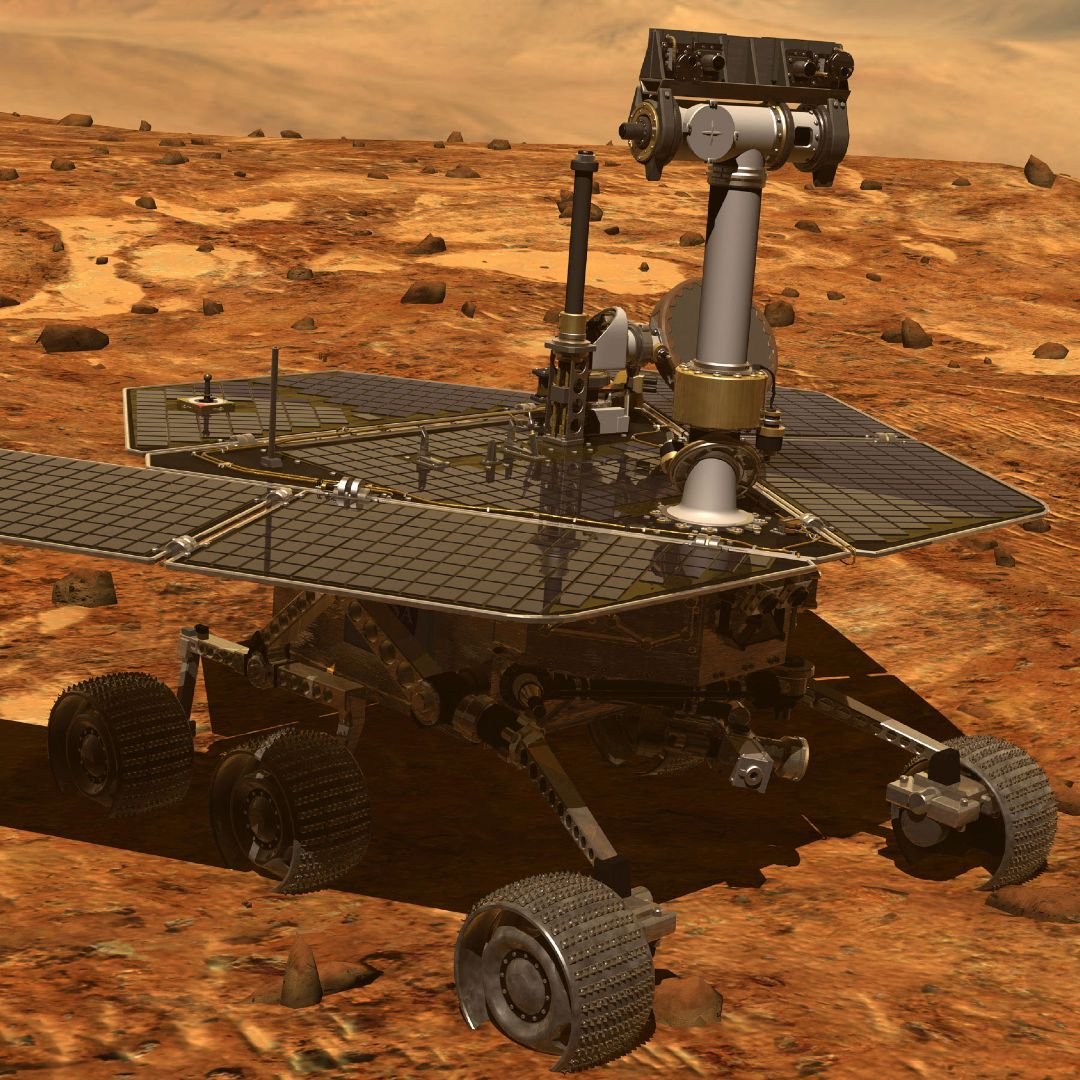
When people search for the Mars Rover Last Words last words, they are usually thinking of NASA’s Opportunity rover and the haunting phrase: “My battery is low and it’s getting dark.”
It is one of the most memorable stories in space exploration. But there is an important detail that often gets lost in the retelling: Opportunity did not literally transmit those words.
The rover sent scientific and engineering data. As a massive Martian dust storm blocked sunlight from reaching its solar panels, that data showed that Opportunity’s power was falling and conditions were becoming extremely dark and cold. NASA’s John Callas later described the final information from the rover as: “Batteries were low. It’s getting dark, and it’s cold.”
So what actually happened to Opportunity, and where did the famous last-words quote come from?
What Were the Mars Rover Last Words?
The phrase most commonly associated with Opportunity is:
“My battery is low and it’s getting dark.”
That wording is not a literal transmission from the rover. Opportunity was not capable of having a conversation or composing sentences. Its communications consisted of telemetry, images, measurements, and other spacecraft data.
The famous sentence is better understood as a poetic translation of what the rover’s final data indicated: its available power was extremely low, sunlight was being blocked by dust, and the rover was heading into increasingly difficult conditions.
NASA’s own later account gives a more technically grounded description. John Callas, who managed the Mars Exploration Rover project, said the final information received from Opportunity indicated that its batteries were low, it was getting dark, and it was getting cold.
That distinction matters. The emotional quote captures the situation beautifully, but presenting it as a literal sentence sent from Mars creates a misleading picture of how the rover communicated.
What Actually Happened to Opportunity?
Opportunity landed on Mars on January 24, 2004, with a primary mission designed to last only about 90 Martian days.
Instead, it kept working for almost 15 years.
During that time, the rover traveled more than 28 miles (45 kilometers), investigated Martian rocks and soil, and helped provide strong evidence that liquid water had existed on ancient Mars. NASA ultimately ended the mission in February 2019 after months of unsuccessful attempts to re-establish contact.
The final crisis began with a huge dust storm in June 2018.
Opportunity depended on solar panels to generate electrical power. As dust filled the Martian atmosphere and blocked sunlight, the rover could no longer produce enough energy to maintain normal operations.
On June 10, 2018, Opportunity transmitted what became its final data to Earth. NASA’s archive identifies a partial, noisy image from that transmission as the last data it received from the rover. The image was taken in Perseverance Valley while the dust storm was obscuring the Sun.
The image itself is strikingly appropriate. Instead of a clear Martian landscape, it is mostly darkness and camera noise because so little sunlight was reaching the rover.
Why Did the Dust Storm Matter So Much?
Mars has a thin atmosphere, but dust storms can become enormous.
The 2018 storm grew to a scale that affected much of the planet. For a solar-powered rover, that created a serious chain reaction.
Less sunlight meant less electrical power. Lower power made it harder to keep the rover’s systems and heaters operating. Falling temperatures then became another threat to the spacecraft.
Opportunity entered a low-power state as conditions deteriorated. The storm did not simply make it difficult for the rover to see. It threatened the energy and thermal conditions required for the rover to survive.
NASA later explained that the skies became so dark over Opportunity that there was effectively no sunlight reaching the surface at the rover’s location.
Was “My Battery Is Low and It’s Getting Dark” Really Its Last Message?
Not literally.
This is probably the most important fact to understand about the famous story.
Opportunity’s final communication was spacecraft data, not a spoken or written message. NASA’s official archive says its last transmitted data included a partially completed Pancam image taken on June 10, 2018.
The sentimental wording became popular because it offered an easy way to describe what those technical signals meant.
NASA’s later podcast account gives the underlying situation in more direct engineering terms: the rover’s batteries were low, the environment was becoming dark and cold, and the rover eventually shut down.
In other words, the famous sentence is emotionally accurate but technically paraphrased.
That is why responsible explanations should avoid claiming that Opportunity literally “said” those words.
What Was Opportunity’s Actual Final Transmission?
Opportunity’s last confirmed communication arrived on June 10, 2018.
Among the final data was an incomplete image from the rover’s Panoramic Camera. NASA explains that the rover transmitted the image through the Mars Reconnaissance Orbiter, but the transmission stopped before the full image could be sent. The result was a dark, incomplete frame filled with visible camera noise.
Interestingly, that was not quite the last image Opportunity took.
The rover captured another set of images roughly three minutes later. Their thumbnail versions reached Earth, but the full-resolution versions were never transmitted because communication with the rover was lost.
That makes the ending more scientifically interesting than the popular quote suggests. Opportunity was still collecting data as its available power disappeared. Its final “message” was not a farewell—it was the last fragment of information its systems managed to send home.
Why Couldn’t NASA Wake Opportunity Up?
After losing contact, NASA did not immediately declare the rover dead.
Engineers spent months trying to restore communication. They had reason to hope because Opportunity had survived difficult conditions before, including previous dust events.
NASA sent repeated commands intended to make the rover respond. The team ultimately made more than 1,000 attempts to re-establish contact. None succeeded.
The problem was that the dust storm created a combination of low power and extreme cold that could have permanently damaged the rover.
By February 2019, NASA concluded that the likelihood of hearing from Opportunity again was too low to justify continuing recovery operations. The agency formally ended the mission after nearly 15 years on Mars.
Opportunity’s “Last Words” Became a Human Story
There is a reason the paraphrased message became so powerful.
Opportunity was a machine, but humans had spent years operating it, studying its discoveries, giving locations informal names, and watching its journey unfold one Martian day at a time.
The rover had vastly exceeded its planned lifetime. NASA originally designed the mission for roughly 90 Martian days, yet Opportunity continued operating for nearly 15 years.
By the time it stopped communicating, people had naturally developed a strong attachment to it.
The phrase “my battery is low and it’s getting dark” gave that attachment a simple emotional focal point. It turned complex telemetry into a sentence anyone could understand.
But the real story may be more impressive than the fictionalized version.
Opportunity did not need to speak for its final transmission to tell us something. The data showed exactly what was happening: sunlight was disappearing, power was falling, and the rover was struggling to survive.
What Happened to Spirit, Opportunity’s Twin?
Opportunity was not the only Mars Exploration Rover to have a difficult ending.
Its twin, Spirit, landed on Mars in January 2004 and also far exceeded its planned mission duration.
Spirit eventually became stuck in soft Martian soil. Its last communication with Earth occurred on March 22, 2010, as Martian winter approached and its solar-energy supply declined. NASA continued trying to make contact before ending recovery efforts in 2011.
Spirit does not have a famous equivalent of the “battery is low” quote.
That is another reason the phrase is so strongly associated with Opportunity: it combines a dramatic ending with an unusually memorable human interpretation.
Are There Any Mars Rovers Still Operating?
Yes. The phrase “Mars rover last words” can be confusing because not every rover has reached the end of its mission.
NASA’s Curiosity rover, for example, was still actively exploring Mars in 2026. NASA published mission updates in July 2026 showing Curiosity continuing its scientific work and traveling through Martian terrain.
So if you’re looking for the famous Mars Rover Last Words farewell, you’re almost certainly looking for Opportunity, not a message from a current rover.
That distinction is especially useful when reading older articles or social-media posts that describe “the Mars rover” without naming it.
The Most Common Misconception About Opportunity’s Last Words
The biggest mistake is treating the famous quotation as if Opportunity had a human-like voice.
It didn’t.
The rover’s computers measured things such as power levels, temperatures, environmental conditions, and camera data. Those measurements were transmitted to Earth and interpreted by engineers and scientists.
The sentence “My battery is low and it’s getting dark” is therefore best described as a popular paraphrase of Opportunity’s final condition.
NASA itself has used more technical language when describing the final data, including that the batteries were low and the rover was becoming cold and dark.
That doesn’t make the famous quote meaningless. If anything, understanding its origin makes the story more compelling.
What Can We Learn From Opportunity’s Ending?
Opportunity’s final transmission illustrates a basic reality of robotic space exploration: spacecraft do not have to fail suddenly to reach the end of a mission.
Sometimes the environment gradually removes the conditions a machine needs to operate.
For Opportunity, sunlight was the critical resource. Once the dust storm prevented the rover’s solar panels from receiving enough light, every other system became vulnerable.
Its ending also demonstrates why mission teams collect extensive engineering telemetry. A spacecraft’s data can reveal what happened even when the machine can no longer respond.
Finally, Opportunity’s story shows why long-running robotic missions become more than engineering projects in the public imagination. The rover was built from metal, electronics, software, and scientific instruments. Yet after years of exploration, its disappearance from Mars still felt like a farewell.
That emotional response came from the people behind the mission—and from everything Opportunity had accomplished.
Frequently Asked Questions
What were the Mars rover last words?
The famous phrase associated with Opportunity is “My battery is low and it’s getting dark.” However, this was not a literal sentence transmitted by the rover. It is a human-readable paraphrase of its final telemetry and condition.
Which Mars rover said “My battery is low and it’s getting dark”?
The quote is associated with NASA’s Opportunity rover. Opportunity stopped communicating during a massive dust storm in June 2018, and NASA ended the mission in February 2019.
What was Opportunity’s actual last transmission?
Opportunity’s final confirmed communication arrived on June 10, 2018. Among its last data was a partially transmitted Panoramic Camera image showing a dark, noisy view caused by the dust storm.
Did Opportunity really know it was dying?
No. There is no evidence that Opportunity was conscious or understood that it was dying. Its computers reported engineering and scientific data. Humans later interpreted those data to describe its final condition.
Why did Opportunity stop working?
A planet-wide dust storm blocked sunlight from reaching its solar panels. The resulting loss of electrical power, combined with increasingly cold conditions, eventually caused the rover to stop communicating.
How long was Opportunity supposed to last?
Opportunity was designed for a mission of about 90 Martian days. It ultimately operated for nearly 15 years, vastly exceeding its original mission plan.
What happened to Spirit, Opportunity’s twin?
Spirit last communicated with Earth on March 22, 2010. NASA later ended efforts to regain contact after the rover failed to respond following the Martian winter.
Is the Mars rover Curiosity still working?
Yes. NASA’s Curiosity mission was still active in 2026, with the rover continuing to conduct scientific investigations on Mars.
Final Thoughts
The story behind the Mars Rover Last Words last words is slightly different from the version that spread across the internet.
Opportunity never literally typed or transmitted, “My battery is low and it’s getting dark.” Its final communication was technical data and an incomplete image sent from a world being swallowed by dust.
But the famous phrase remains meaningful because it captures the situation remarkably well.
The rover was losing power. The Sun was disappearing behind dust. Temperatures were falling. And after nearly 15 years on Mars, Opportunity sent its final data home.
Its last transmission was not a goodbye.
It was a final piece of information from a remarkably resilient machine that had spent years exploring another planet.
FAQ Section
What were the Mars rover last words?
The famous Opportunity quote is “My battery is low and it’s getting dark,” but it was a paraphrase of telemetry rather than a literal message.
Which Mars Rover Last Words had those famous last words?
NASA’s Opportunity rover.
What did Opportunity actually transmit?
Its final communication included engineering data and a partially transmitted Panoramic Camera image taken during the 2018 dust storm.
When did Opportunity stop communicating?
June 10, 2018.
Why did Opportunity die?
A severe dust storm blocked sunlight from its solar panels, causing its power supply to fall while cold temperatures posed an additional threat.
How long did Opportunity operate?
Almost 15 years, despite being designed for a mission of roughly 90 Martian days.
Was Opportunity’s final message literally spoken?
No. The rover transmitted data, not human language.
Is Curiosity still operating?
Yes. NASA was still publishing active Curiosity mission updates in 2026.