

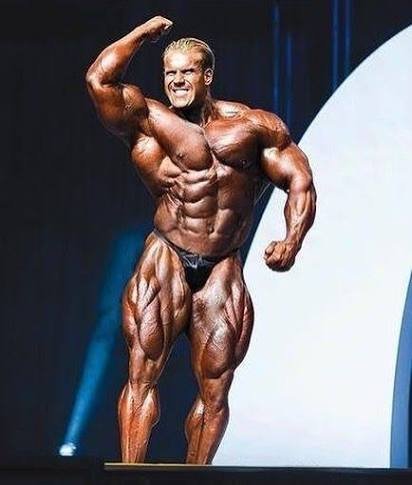
Walk into any old-school gym and mention the name Boyer Coe, and you’ll usually get a nod of respect rather than a blank stare. He never carried the size of Sergio Oliva or the star power of Arnold Schwarzenegger, yet he shared the same stages as both of them for the better part of two decades. What set Coe apart wasn’t raw mass. It was proportion, symmetry, and a training mind that treated bodybuilding as a science rather than a guessing game.
This article walks through who Boyer Coe is, what made his approach to training different, and why bodybuilding historians still bring up his name when the conversation turns to the sport’s Golden Era.
Who Is Boyer Coe?
Boyer Coe was born on August 18, 1946, in Lake Charles, Louisiana. He started lifting weights as a young teenager and trained at the Lake Charles Athletic Club under Red Lerille, a former Mr. America who became his mentor and lifelong friend. That mentorship mattered. Lerille didn’t just teach Coe how to lift; he taught him how to think about training as a long game rather than a quick fix.
Coe’s first real competitive win came in 1964, when he took the Mr. New Orleans title just days before graduating high school. From there, his career built steadily rather than exploding overnight — a pattern that shows up again and again in his story. He picked up the Mr. Texas title in 1965, Junior Mr. America in 1969, Mr. World in 1970, and Mr. Universe in 1973. Those wins placed him firmly among the top-tier competitors of his generation, sharing stages with names like Arnold Schwarzenegger, Sergio Oliva, Frank Zane, and Mike Mentzer.
What makes Coe’s career unusual is its length. Most bodybuilders peak and fade within a decade. Coe competed seriously across four decades, stepping away from the professional stage for about ten years before returning in strong condition for the 1994 and 1995 Masters Olympia contests. His comeback became the subject of the 1996 documentary Stand Tall, which followed his rivalry with Lou Ferrigno during that era.
Why Boyer Coe Matters in Bodybuilding History
Bodybuilding in the 1970s was full of size-first competitors. Boyer Coe took a different route, one built around symmetry, muscle density, and stage presentation. He understood that a physique isn’t just about how much muscle you’re carrying — it’s about how that muscle is arranged and how it reads from a distance, under lights, in a lineup of similarly conditioned athletes.
He’s also closely associated with High-Intensity Training (HIT), the philosophy popularized by Arthur Jones and Mike Mentzer that argues for fewer, harder sets rather than high-volume routines. Coe didn’t invent HIT, but he applied it thoughtfully throughout parts of his career, and that association has kept his name relevant among lifters who lean toward efficient, brief, and brutal training sessions over marathon gym sessions.
For anyone studying the history of physique sports, Boyer Coe represents a counterpoint to the “bigger is always better” narrative. His longevity alone argues that a smarter, more sustainable approach to training can outlast pure mass-building strategies.
Key Lessons From Coe’s Career
Symmetry beats size in judging, but only to a point. Boyer Coe titles came from balance and proportion, not from being the biggest man on stage. That said, symmetry without adequate muscle mass doesn’t win at the highest levels either — it’s a combination, not a replacement.
Mentorship shapes trajectory. Coe’s early training under Red Lerille gave him both technical knowledge and a long-term mindset. Many lifters skip this step and rely entirely on trial and error, which slows progress and increases injury risk.
Longevity requires adjusting your approach over time. A training style that works at 25 rarely works the same way at 45. Coe’s willingness to shift toward higher-intensity, lower-volume training as his career matured is a big part of why he could still compete at a high level decades after his first win.
Diet doesn’t have to be complicated to be effective. Boyer Coe followed what was standard for his era: high protein, moderate-to-high fat, and lower carbohydrates, with carb intake adjusted up in the off-season and down closer to competition. It wasn’t flashy. It worked because it was consistent.
Common Misconceptions About Golden Era Training
A lot of modern lifters assume Golden Era bodybuilders trained the same way, using the same high-volume, multi-exercise-per-muscle-group approach popularized by Arnold’s generation. That’s not accurate. Boyer Coe training evolved over the decades, and his later-career emphasis on intensity over volume shows that even within a single era, there wasn’t one universal method.
Another misconception is that older training philosophies don’t apply today. Muscle physiology hasn’t changed. The core principles Coe trained around — progressive overload, adequate recovery, and consistency over years rather than weeks — are still the foundation of effective training, regardless of what decade you’re in.
Common Mistakes Lifters Make When Studying Coe’s Methods
People often try to copy a specific routine attributed to Boyer Coe without adjusting for their own experience level, recovery capacity, or goals. A HIT-style routine designed for a professional with decades of training under his belt is not automatically appropriate for someone newer to lifting. Pulling one piece out of context — a single workout split, for example — without understanding the surrounding factors (nutrition, sleep, competition timing) tends to produce disappointing results.
Another mistake is assuming that because Boyer Coe trained with less volume later in his career, low-volume training is always superior. Volume needs shift with training age, recovery ability, and goals. What worked for a seasoned competitor in his 30s and 40s isn’t necessarily the right starting point for a beginner.
Expert Tips Inspired by Coe’s Approach
- Train for symmetry, not just size. Weak points in a physique stand out more than people expect, so address lagging body parts deliberately rather than only training favorite muscle groups.
- Reassess your training volume as your body changes. What builds progress in your first few years of training often needs to change as your recovery capacity shifts.
- Keep nutrition simple and repeatable. Complicated diet plans that are hard to sustain rarely outperform a straightforward, consistent approach.
- Respect the long game. Boyer Coe career lasted because he adjusted rather than forced the same approach year after year.
Frequently Asked Questions
When did Boyer Coe start bodybuilding? Coe began lifting weights as a young teenager and trained at the Lake Charles Athletic Club under Red Lerille before winning his first competition, the Mr. New Orleans title, in 1964.
What titles did Boyer Coe win? His major titles include Mr. Texas (1965), Junior Mr. America (1969), Mr. World (1970), and Mr. Universe (1973), along with numerous regional and Grand Prix wins throughout his career.
Did Boyer Coe ever compete in the Mr. Olympia? Yes. He competed against the top professionals of his era and later returned to the stage for the 1994 and 1995 Masters Olympia after a period away from professional competition.
What is Boyer Coe known for in training philosophy? He’s closely associated with High-Intensity Training (HIT), a method built around fewer but harder sets, which he incorporated more heavily as his career progressed.
Is Boyer Coe still involved in fitness today? He has remained connected to the fitness industry over the years, including business ventures related to exercise equipment and continued involvement in the bodybuilding community.
What made Boyer Coe different from other bodybuilders of his era? His emphasis on symmetry and muscle density, rather than pure size, set him apart in an era often dominated by mass-focused competitors.
Final Thoughts
Boyer Coe career is a reminder that longevity in any physical pursuit comes from adaptability, not stubbornness. He didn’t win by being the biggest name in the room. He won by understanding his own physique, refining his training as his body and the sport changed, and staying in the game long after most of his peers had stepped away. For anyone interested in the history of bodybuilding — or in building a training approach that lasts decades instead of months Coe’s career offers more than nostalgia. It offers a template.