

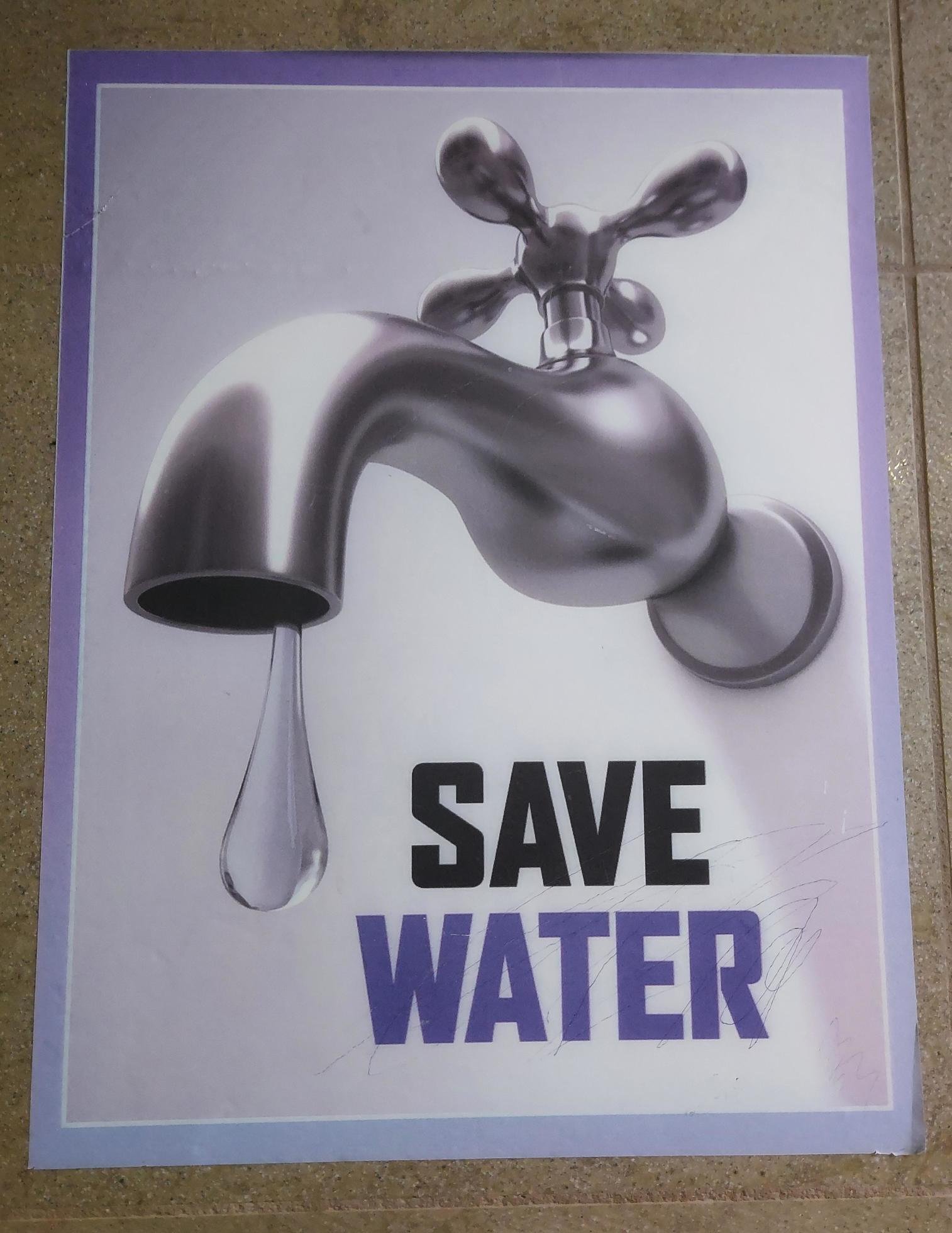
A good save water poster does more than tell people to conserve water. It should make the message easy to understand at a glance and encourage a specific action.
Whether you are creating a poster for a school project, environmental campaign, community event, or public awareness display, the strongest designs usually have three things in common: a clear headline, a memorable visual, and a practical message.
The goal is not to fill the page with information. A poster has only a few seconds to catch someone’s attention, so every word and image needs a purpose.
What Is a Save Water Poster?
A save water poster is a visual communication tool designed to encourage people to use water responsibly. It may focus on everyday habits such as turning off taps, fixing leaks, taking shorter showers, or avoiding unnecessary water waste.
Posters can be created by students, teachers, environmental organizations, businesses, or community groups. They can appear on classroom walls, noticeboards, public spaces, websites, or social media.
A simple message often works best. For example:
Save Water, Save Life
A supporting line can then explain the action:
Turn off the tap while brushing your teeth.
This combination gives the viewer both a reason to care and something practical to do.
Why Saving Water Matters
Fresh water is essential for drinking, sanitation, food production, ecosystems, and countless daily activities. Yet usable freshwater is not unlimited, and access to reliable water supplies varies greatly between regions.
Water conservation also involves more than simply using less water. Wasted Save Water Poster can mean wasted energy and resources because water often needs to be pumped, treated, heated, and transported before it reaches a household or business.
A poster can help turn an abstract environmental issue into an everyday reminder. Seeing a short message near a sink, classroom, garden, or public facility can encourage people to notice habits they might otherwise overlook.
Key Benefits of an Effective Save Water Poster
1. It communicates quickly
People rarely stop to read a poster word for word. A strong headline lets them understand the central message immediately.
2. It encourages specific actions
“Save water” is a useful starting point, but “Turn off the tap while brushing” tells the reader exactly what to change.
3. It makes the issue memorable
A striking illustration can reinforce the message. A water droplet shaped like a leaf, for example, can connect water conservation with nature.
4. It works for different audiences
The same basic idea can be adapted for young children, teenagers, households, workplaces, or community campaigns.
5. It can start conversations
A thoughtful poster can prompt people to discuss Save Water Poster use at home, at school, or in their neighborhood.
How to Create a Save Water Poster Step by Step
Step 1: Decide who will see it
Start with the audience.
A poster for primary-school students might use a cartoon water droplet and a short slogan. A community campaign may need a more serious visual and a practical list of actions.
Knowing the audience helps determine the language, colors, illustrations, and amount of information.
Step 2: Choose one main message
Avoid trying to explain every aspect of water conservation on one page.
Choose one central idea, such as:
- Turn off unnecessary taps.
- Repair leaking pipes and faucets.
- Use only the water you need.
- Reuse suitable household water where safe and practical.
- Protect rivers, lakes, and other water sources.
One strong message is usually easier to remember than five competing messages.
Step 3: Write a short slogan
A slogan should be brief enough to read from a distance.
Here are some ideas:
- Every Drop Counts
- Save Water, Save Life
- Water Is Precious—Don’t Waste It
- Turn Off the Tap
- Use Water Wisely
- Don’t Let Every Drop Go to Waste
- Protect Water, Protect Our Future
- Be Wise—Conserve Water
You can also create a slogan around a question:
How Much Water Are You Wasting?
A question can work particularly well when the poster is intended to make people reconsider a familiar habit.
Step 4: Add a strong visual
The image should support the message rather than compete with it.
Useful visual concepts include:
- A water droplet with a worried or happy expression
- A nearly empty water tap
- Hands protecting a single water drop
- A split image showing waste versus conservation
- A healthy green landscape contrasted with a dry environment
- A faucet with a large “Turn Me Off” message
Keep the main image recognizable. A complicated illustration can make a poster harder to understand from a distance.
Step 5: Include one or two practical actions
Give the reader something achievable.
For example:
SAVE WATER TODAY
- Turn off taps when they are not needed.
- Fix leaks promptly.
- Avoid using more Save Water Poster than necessary.
The actions should be realistic for the audience. A child, for instance, may be able to turn off a tap but cannot repair a leaking household pipe.
Step 6: Check the layout
Before finishing, look at the poster from several feet away.
Can you immediately identify:
- The main message?
- The main image?
- The action you want people to take?
If the answer is no, simplify the design.
Use large text for the headline, enough contrast between text and background, and generous empty space. Empty space is not wasted space; it helps important elements stand out.
Save Water Poster Ideas for School Projects
School posters are a popular way to introduce students to environmental responsibility. A project does not need sophisticated artwork to be effective.
Idea 1: The Water Drop
Draw a large blue water droplet in the center. Inside it, show a small tree, river, or community.
Add:
“Every Drop Matters.”
Then place two or three conservation actions underneath.
Idea 2: Before and After
Divide the poster into two sections.
WASTING WATER:
A running tap and overflowing bucket.
SAVING WATER:
A closed tap and a person using only the water needed.
This approach makes the difference between wasteful and responsible behavior immediately visible.
Idea 3: A Message From a Water Drop
Use a large illustrated droplet with a speech bubble:
“Please don’t waste me!”
Underneath, add simple actions such as turning off taps and reporting leaks.
This playful format can work particularly well with younger students.
Idea 4: One Drop, Many Uses
Show how water supports different parts of life: drinking, cooking, farming, sanitation, plants, and wildlife.
The message could be:
“Water Connects Us All.”
This moves beyond the idea that Save Water Poster conservation is simply about household bills or personal convenience.
Common Mistakes
Too much text
A Save Water Poster is not an essay. Large blocks of text make it difficult to understand the message quickly.
If you have several important facts, consider turning them into short bullet points or creating separate educational material.
Weak contrast
Light blue text on a pale background may look attractive on a screen but become difficult to read when printed.
Choose colors that clearly separate the words from the background.
Too many slogans
Using several large slogans can make the poster feel confused. Pick one headline and let the supporting information do the rest.
Vague instructions
“Save water!” is memorable but incomplete. Pair it with an action such as:
“Turn off the tap while brushing.”
Using misleading claims
Avoid dramatic statements unless you can verify them. A Save Water Poster does not become more persuasive simply because its numbers are bigger or its language is more alarming.
Accuracy builds trust.
Expert Tips for Better Poster Design
Keep the headline short. Six or seven words can be more effective than a long sentence.
Use hierarchy. The viewer should naturally see the headline first, then the image, then the supporting information.
Design for distance. If the Save Water Poster will hang in a hallway or public area, test whether the main message remains readable from several feet away.
Match the tone to the audience. A children’s poster can be playful; a public-awareness campaign may call for a more direct approach.
Focus on behavior. Tell people what they can do rather than only describing the problem.
Leave breathing room. Crowding every corner with words and pictures makes the design harder to scan.
Proofread before printing. A spelling error in a large headline is particularly noticeable and can undermine an otherwise strong project.
Frequently Asked Questions
What should I write on a save water poster?
Start with a short slogan such as “Every Drop Counts” or “Save Water, Save Life.” Add one or two practical actions, such as turning off taps and fixing leaks.
How do I make a save water poster attractive?
Use one strong image, a clear headline, contrasting colors, and limited text. The design should be easy to understand within a few seconds.
What is a good save water poster slogan for school?
“Every Drop Counts” is simple and suitable for many age groups. Other options include “Use Water Wisely” and “Don’t Waste Our Water.”
What colors work well for a water conservation poster?
Blue is an obvious choice because it is associated with water, but green can reinforce the environmental theme. Use strong contrast so the text remains readable.
Can I make a save water poster digitally?
Yes. A digital poster can be created with presentation, illustration, or graphic-design software. The same principles apply: clear hierarchy, limited text, strong contrast, and one central message.
What should a water conservation poster include?
A useful poster normally includes a headline, an appropriate image, a short supporting message, and at least one specific action the viewer can take.
Should a school poster contain facts and statistics?
Only if they genuinely improve the message and can be verified. A single reliable fact can be useful, but a poster does not need statistics to communicate a strong conservation message.
Final Thoughts
An effective save water poster does not need elaborate artwork or a long explanation. It needs a clear idea that people can understand quickly and connect with an action they can actually take.
Choose one message, make the headline visible, use an image that reinforces the idea, and remove anything that does not help the viewer understand the point. Whether the poster is created for a classroom, community campaign, or public display, simplicity often makes the message stronger.
FAQ Section
What is the best slogan for a save water poster?
“Every Drop Counts” is a short, memorable choice. “Save Water, Save Life” is another widely understandable option.
How many words should a water conservation poster have?
There is no fixed limit, but keeping the main message brief makes it easier to read from a distance. Use short supporting points rather than paragraphs.
What picture can I draw for a water-saving poster?
Try a large water droplet, a closed faucet, hands protecting a drop, or a before-and-after comparison showing water waste and conservation.
What are three ways to save water?
Turn off taps when they are not needed, repair leaks, and use only as much water as necessary for the task.
How can children help save water?
Children can turn off taps properly, avoid playing with running water, tell an adult about leaks, and use water carefully at school and home.
Is a digital save water poster effective?
Yes. Digital posters can work well for websites, presentations, school assignments, and social media, provided the design remains clear and readable.
Should I use statistics on a water-saving poster?
Use statistics only when they are relevant and verified. A simple, accurate message is often more effective than a poster crowded with numbers.