
Open most professional kitchens and you’ll find a small open dish sitting near the stove, filled with Salt Cellar and nothing else. No lid to fuss with, no shaker to shake. That’s a salt cellar, and it’s one of those tools that seems almost too simple to matter — until you’ve cooked with one for a week and gone back to a salt shaker, which suddenly feels clumsy by comparison.
This isn’t a trendy gadget. Salt cellar have been around for centuries, long before pepper mills and spice racks became kitchen standards. What’s changed is who’s using them. They used to sit on formal dining tables as a mark of status. Now you’ll find them next to home cooktops, doing quiet, practical work.
This guide covers what a salt cellar actually is, why so many cooks prefer one over a shaker, how to choose the right one, and how to use and care for it so it actually earns its spot on your counter.
What Is a Salt Cellar?
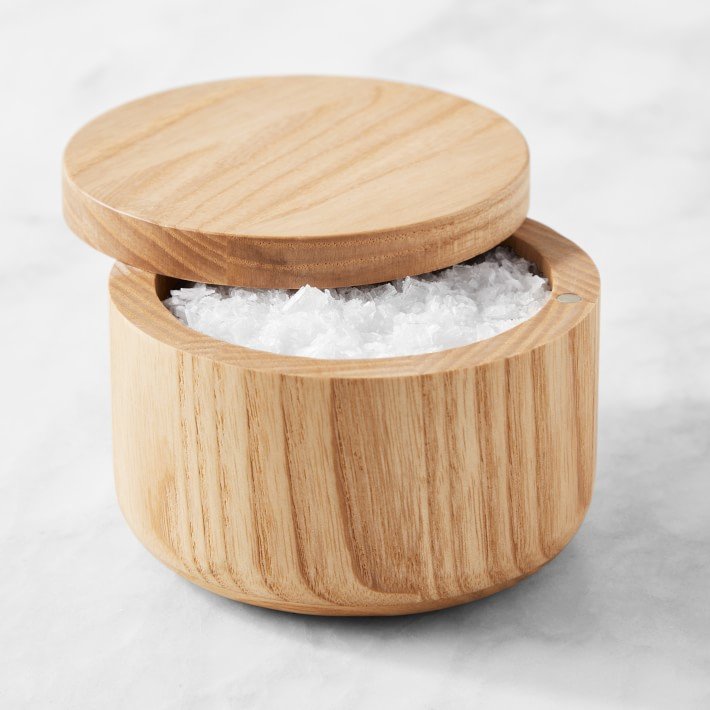
A salt cellar is an open or lightly lidded container designed to hold salt for everyday cooking use. Unlike a shaker, it has no spout, no holes, and usually no tight seal. You reach in with your fingers or a small spoon and take exactly as much salt as you need.
The word “cellar” here doesn’t refer to a basement — it comes from the Old French salier, meaning a salt container, which itself traces back to the Latin sal for salt. Historically, salt was expensive enough that cellars were often ornate, sometimes made of silver or pewter, and placed near the host at formal dinners as a visible sign of wealth.
Today’s version is much more modest and far more useful in practice. Most are small bowls made of ceramic, wood, or stone, sized to hold anywhere from a few tablespoons to a cup of salt. Some come with a hinged wooden lid to keep out moisture and dust; others are left completely open for cooks who reach into them constantly while working.
Why It Matters
The appeal of a salt cellar isn’t about tradition for its own sake. It solves a few real problems that shakers create.
Speed and control. When you’re cooking, especially something that moves fast — a sauté, a reduction, a pan of eggs — you don’t want to be shaking a container and guessing how much came out. Pinching salt from an open cellar lets you judge the amount by feel, adjust instantly, and season in layers as you go, which is how most professional cooks actually season food.
Better salt texture. Many shakers are designed for fine table salt, and the holes clog easily with coarser kosher salt or flaky sea salt. A cellar has no such limitation. You can keep whatever salt you prefer — flaky, coarse, fine — without worrying about whether it’ll pour.
Less waste, less mess. Shakers that get damp tend to clump, and a clogged shaker often gets tapped harder than it should, dumping out far more salt than intended. An open cellar avoids that failure mode entirely.
None of this means a shaker is wrong to own. If you like consistent, even seasoning at the table — on popcorn, on eggs before you’ve tasted them — a shaker still does that job well. A cellar is built for active cooking, not the table.
Key Benefits
- Faster seasoning during cooking, since there’s no shaking or waiting.
- Works with any salt type, from flaky Maldon to coarse kosher salt to fine sea salt.
- Easier to judge quantity by feel, which matters more than most people expect once they get used to it.
- Low mess when used correctly, especially with a lid or a designated spot away from splashes.
- Long lifespan. A well-made ceramic or wood cellar can last decades with almost no maintenance.
Step-by-Step Guide: Choosing and Setting Up a Salt Cellar
1. Decide where it will live. Pick a spot within arm’s reach of your stove or prep area — not inside a cabinet. The entire point of a cellar is quick access while your hands are busy with something else.
2. Choose a material that fits how you cook. Ceramic is the most common choice and works well for most kitchens. Wood (often acacia or olive wood) looks warm and rustic but needs occasional oiling to avoid drying out. Stone versions, like marble or soapstone, are heavier and more resistant to moisture, which suits humid kitchens.
3. Pick a size based on your salt turnover. If you cook daily, a cellar holding around half a cup is usually enough for a week or two before refilling. Smaller cellars look nicer on a counter but need refilling more often — which isn’t a dealbreaker, just something to expect.
4. Decide if you want a lid. A lid helps in humid climates or if your cellar sits near a stove with a lot of steam. If your kitchen is dry and you use the cellar constantly, an open one is often more convenient since there’s nothing to flip open mid-cook.
5. Fill it with the right salt for your habits. Kosher salt is a common default for cellars because it’s easy to pinch and measure by feel. Flaky salt works well too, especially for finishing dishes. Fine table salt is the least common choice here — it’s better suited to a shaker.
6. Keep a small spoon nearby if you’d rather not use your fingers. Plenty of cooks prefer using their fingers for better control, but a small spoon works fine too, especially if you’re cooking for others and want to avoid direct contact with shared salt.
Common Mistakes
Placing it too far from the stove. If you have to walk across the kitchen to reach it, you’ll stop using it and go back to whatever’s closest — usually a shaker.
Using fine table salt in a humid kitchen without a lid. Fine salt absorbs moisture fast and clumps. If your kitchen runs humid or you live somewhere with high humidity, either use a coarser salt or get a cellar with a lid.
Overfilling it. A cellar packed to the brim makes it harder to pinch salt cleanly, and it’s more likely to spill if bumped. Filling it about two-thirds full works better in practice.
Forgetting to clean it occasionally. Salt itself doesn’t spoil, but oils from your hands, kitchen grease, and general use can build up over time, especially with wood cellars. A quick wipe every few weeks keeps it in good shape.
Assuming any bowl will do. A regular bowl works in a pinch, but purpose-made cellars are shaped for easy pinching — often wider and shallower than a standard bowl — which makes a real difference in daily use.
Expert Tips
- Season in stages, not all at once. Cooks who use cellars regularly tend to add salt at multiple points during cooking rather than one large dose at the end. It builds flavor more evenly and gives you more control.
- Taste before you judge the pinch. The exact amount in a “pinch” varies by hand size and how tightly you grip. Taste your food as you go rather than trusting a fixed measurement.
- Match salt type to task. Kosher salt for general cooking, flaky salt for finishing a dish just before serving, and fine salt for baking where precise measurement matters more than feel.
- Store it away from direct sunlight if it’s wood. Sunlight can dry and crack wooden cellars over time, the same way it affects wooden cutting boards.
- Don’t over-think the ritual. Some cooks treat salt cellars as something precious. In practice, it’s a working tool — the goal is convenience, not ceremony.
Frequently Asked Questions
Is a salt cellar the same thing as a salt pig? They’re closely related. A salt pig usually refers to a covered, often pig-shaped or rounded ceramic container with a wide opening for pinching salt, while “salt cellar” is the broader term that includes open dishes, lidded boxes, and salt pigs alike.
Does salt go bad if left in an open cellar? No. Salt doesn’t spoil or expire. It can absorb moisture and clump in humid conditions, but the salt itself remains safe to use indefinitely.
What’s the best salt to keep in a cellar? Kosher salt is the most common choice because it’s easy to pinch accurately and doesn’t clump as easily as fine salt. Flaky sea salt is a good second option, especially for finishing dishes.
Can I use a salt cellar instead of a salt shaker at the table? You can, though it’s less practical for guests who aren’t used to pinching salt with their fingers. Many households keep a cellar in the kitchen for cooking and a shaker at the table for convenience.
How often should I clean a salt cellar? A wipe-down every few weeks is usually enough for ceramic or stone versions. Wooden cellars benefit from occasional light oiling to prevent drying and cracking.
Is it unsanitary to use your fingers to take salt from a cellar? It’s generally fine for personal use, since salt is naturally antimicrobial and inhospitable to most bacteria. If you’re serving guests or sharing a kitchen, a small spoon is a simple way to avoid any concern.
Do I need a lid on my salt cellar? Not always. A lid helps in humid kitchens or if the cellar sits near steam from cooking. In a dry kitchen with frequent use, an open cellar is often more convenient.
Final Thoughts
A salt cellar won’t change how food tastes on its own — good seasoning still comes down to tasting as you go and understanding how salt behaves in whatever you’re cooking. What it changes is how easily you can act on that understanding. Reaching into an open dish takes less thought and less time than shaking a container and guessing, and that small shift adds up over hundreds of meals.
If you cook often and season by feel rather than by measuring spoons, a salt cellar is worth the counter space. If you mostly reach for salt at the table rather than the stove, a shaker will probably serve you just as well. Either way, it’s a small decision, and either way, your food will still need the same thing it always has: enough salt, added with attention.