

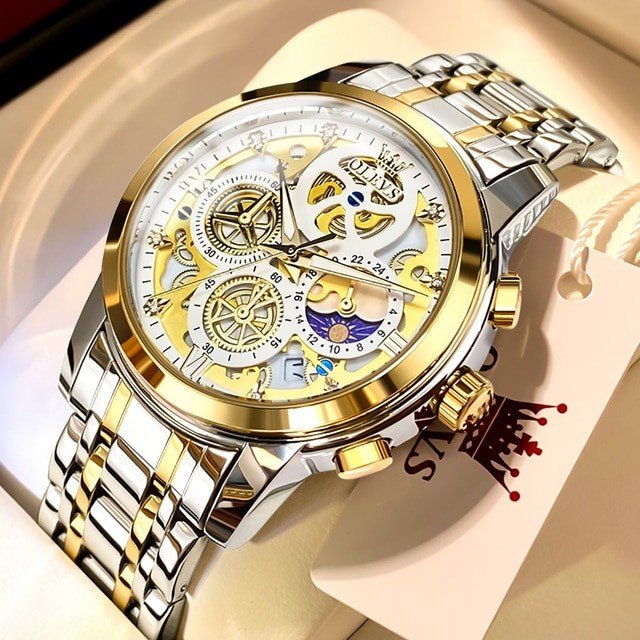
A luxury watch can be much more than a way to tell time. The right piece can complete an outfit, reflect personal taste, and become something you keep for years rather than replace every season. But with hundreds of brands, movements, materials, and price points available, choosing among luxury watches for men can quickly become confusing.
The best choice is rarely the watch with the biggest name or highest price. It is the one that suits your wrist, lifestyle, wardrobe, and expectations.
This guide explains what makes a watch luxurious, which features deserve your attention, how to choose between mechanical and quartz movements, and what to check before spending serious money.
What Makes a Watch “Luxury”?
Luxury watchmaking is not defined by price alone. A high price can reflect craftsmanship, materials, brand heritage, production methods, finishing, or scarcity—but expensive does not automatically mean better for every buyer.
Traditional Luxury Watches for Men often feature carefully finished cases, sapphire crystals, mechanical movements, quality bracelets or straps, and detailed dials. Some are assembled and adjusted by hand, while others combine traditional techniques with modern manufacturing.
Brands such as Rolex, Omega, Cartier, Patek Philippe, and Audemars Piguet occupy different parts of the luxury market, with very different designs and buying experiences.
That variety is useful. It means you do not have to buy a particular brand simply because it is famous.
Why Luxury Watches for Men Remain Popular
A good watch occupies an unusual place in men’s fashion. Unlike many accessories, it can be both functional and highly personal.
They can last for decades
A well-made mechanical watch can often be serviced and maintained for many years. Parts may be replaceable, and regular servicing can help keep the movement operating properly.
That makes a quality watch fundamentally different from a disposable fashion accessory.
They work across different occasions
A simple dress watch can look appropriate with formal clothing, while a versatile sports watch may work with jeans, business-casual clothing, and a suit.
The most useful watch in a collection is often the one you can wear without having to think about whether it matches the occasion.
They express personal style
Two watches can have similar technical specifications but create completely different impressions.
A clean three-hand watch may suggest understated taste. A chronograph can feel more technical and sporty. A diver-style watch tends to have a more rugged character, while a dress watch usually emphasizes thinness and elegance.
The design should therefore match the person wearing it—not simply the current trend.
Mechanical vs. Quartz: Which Should You Choose?
One of the first decisions when shopping for a luxury watch is the movement.
Mechanical watches
Mechanical watches use a network of springs, gears, and other components rather than a conventional battery-powered quartz movement.
There are two broad categories:
- Manual-wind: You periodically wind the watch by hand.
- Automatic: Movement of your wrist helps wind the mainspring.
Mechanical watches appeal to buyers who appreciate traditional watchmaking and the engineering inside the case.
The downside is that they generally require more care than quartz watches. They can also be less accurate than a good quartz movement and may need periodic servicing.
Quartz watches
Quartz watches use electronic circuitry regulated by a quartz crystal. They are generally highly accurate and convenient.
For someone who wants a watch that can sit in a drawer for weeks and still be simple to operate when needed, quartz has a practical advantage.
The assumption that quartz automatically means “cheap” is also outdated. High-end brands have produced sophisticated quartz watches, and some collectors appreciate them precisely for their accuracy and practicality.
How to Choose the Right Watch Size
Case diameter gets plenty of attention, but it is only one part of the equation.
A watch’s lug-to-lug length, thickness, bezel design, dial opening, and bracelet or strap can dramatically affect how large it appears on your wrist.
For example, a 40mm watch with a compact design may wear smaller than another 40mm model with long, prominent lugs.
Before buying online, measure your wrist and compare the manufacturer’s dimensions with a watch you already own.
A practical approach
If you prefer a conservative appearance, look for a case that sits comfortably within the wrist rather than extending noticeably beyond it.
If you like a stronger presence, a larger sports watch may suit you better.
There is no universal “correct” size. Wrist proportions and personal preference matter more than a number printed on a specification sheet.
Choosing a Watch Style
Your lifestyle should influence the type of watch you buy.
Dress watches
Dress watches typically prioritize simplicity, thin profiles, clean dials, and elegant finishing.
They are ideal for formal events, professional settings, or anyone who prefers understated accessories.
Dive watches
Dive watches are generally characterized by features such as rotating bezels, strong water resistance, and highly legible markers.
You do not need to be a diver to wear one. Their durable appearance makes them popular everyday choices.
Chronographs
A chronograph includes a stopwatch function and usually has additional sub-dials.
They tend to look more technical and visually complex. If you enjoy detailed dials and sporty styling, a chronograph may be a good fit.
Field and everyday watches
These watches typically emphasize readability, durability, and versatility.
They are particularly useful for buyers who want one watch that works with casual and smart-casual clothing.
Materials Matter—But Not Always in the Way You Think
Luxury watches can be made from stainless steel, titanium, ceramic, precious metals, and various combinations of these materials.
Stainless steel
High-quality stainless steel remains one of the most practical choices. It can provide durability without the weight and cost associated with precious metals.
Titanium
Titanium is known for being lightweight. This can make larger watches more comfortable to wear.
Gold
Gold creates a distinctive appearance and adds substantial material value. However, it is softer than many steel alloys and can show scratches more readily.
Ceramic
Ceramic components can offer strong scratch resistance and a distinctive finish, although ceramic parts can behave differently from metal when subjected to severe impacts.
Material selection should therefore reflect how you plan to wear the watch rather than simply which material sounds most luxurious.
Understanding Water Resistance
Water resistance is another specification that is often misunderstood.
A watch marked “30 meters” does not mean you should take it 30 meters underwater. Water-resistance ratings are based on controlled testing and do not perfectly represent real-world movement, pressure, temperature changes, or impact.
If you regularly swim or participate in water activities, choose a watch specifically designed for that environment and follow the manufacturer’s guidance.
Also remember that water resistance is not necessarily permanent. Seals can age, so maintenance matters.
New vs. Pre-Owned Luxury Watches
Buying pre-owned can give you access to models that are discontinued, difficult to find, or considerably less expensive than comparable new examples.
But it also introduces additional risks.
A pre-owned watch should be evaluated for:
- Authenticity
- Condition
- Service history
- Original components
- Serial or reference information
- Box and paperwork, when relevant
- Seller reputation
- Return policy
A watch that looks perfect in photographs can have replacement parts, polishing, mechanical problems, or an unclear history.
For expensive purchases, authentication and an independent inspection can be worth the extra effort.
How Much Should You Spend?
There is no sensible universal budget for luxury watches.
A better approach is to decide what the watch is worth to you before shopping.
Consider:
- How frequently you expect to wear it.
- Whether it will be your only watch or part of a collection.
- Whether you prioritize brand recognition or craftsmanship.
- How much you are comfortable spending without financial pressure.
- Potential servicing and ownership costs.
- Whether you are buying new or pre-owned.
Do not stretch your budget simply because a salesperson, influencer, or collector says a particular model is a “must-have.”
A less expensive watch that you wear regularly can be a much better purchase than an expensive piece that spends most of its life in a box.
Common Mistakes Buyers Make
Buying only for the brand
A famous logo can be attractive, but brand reputation should not replace evaluation of the actual watch.
Compare the design, movement, dimensions, finishing, comfort, warranty, service network, and overall ownership experience.
Ignoring comfort
A beautiful watch that feels heavy, digs into your wrist, or catches on clothing may eventually become a drawer watch.
Try it on whenever possible.
Choosing based only on case diameter
Diameter alone does not determine fit. Thickness and lug-to-lug length can be just as important.
Assuming expensive means investment-worthy
Some luxury watches retain value well, while others depreciate significantly. Resale prices can change because of market demand, availability, condition, and broader economic factors.
Buy a watch because you genuinely want to own it. Treat potential appreciation as a bonus rather than a guarantee.
Forgetting servicing costs
Mechanical watches are machines. They require maintenance.
Before purchasing, understand the manufacturer’s recommended service schedule and the likely cost of keeping the watch in good condition.
How to Buy Luxury Watches Safely
The seller matters almost as much as the watch.
For a new watch, an authorized retailer or reputable established dealer can provide important advantages, including warranty support and documentation.
For a pre-owned watch, investigate the seller carefully. Look for a clear business identity, transparent condition reports, return policies, authentication procedures, and a track record that can be independently verified.
Be particularly cautious when a deal appears dramatically cheaper than comparable examples.
A low price can have a legitimate explanation, but it can also signal counterfeit goods, missing components, undisclosed damage, or other problems.
Expert Tips for Choosing Your First Luxury Watch
If this is your first serious watch purchase, resist the temptation to build an elaborate collection immediately.
Start with one versatile piece.
A neutral dial, moderate case size, comfortable bracelet or strap, and established service support can give you much more flexibility than a highly specialized design.
It is also worth wearing different watches before deciding. Visit reputable retailers, try different case sizes, and pay attention to details that photographs cannot communicate: thickness, weight, clasp comfort, dial legibility, and how the watch sits on your wrist.
Finally, give yourself time. Luxury watches are not necessities, so there is rarely a reason to rush into a purchase.
Frequently Asked Questions
What are the best luxury watches for men?
The answer depends on your budget, style, wrist size, and intended use. Established Swiss and international manufacturers offer everything from understated dress watches to professional-style sports watches.
Are luxury watches for men worth buying?
They can be, particularly if you value craftsmanship, design, durability, and long-term ownership. They are less compelling if you are buying purely because you expect the watch to increase in value.
Should I buy a mechanical or quartz luxury watch?
Choose mechanical if you enjoy traditional watchmaking and the engineering of a mechanical movement. Choose quartz if accuracy, convenience, and minimal maintenance are your priorities.
How should a luxury watch fit?
The case should sit comfortably on your wrist without the lugs extending awkwardly beyond its edges. Thickness and lug-to-lug length are important in addition to case diameter.
Is buying a pre-owned luxury watch safe?
It can be, provided you buy from a reputable seller and verify authenticity, condition, service history, and return policies. For expensive purchases, professional authentication can provide additional protection.
Do luxury watches hold their value?
Some models and brands have historically held value better than others, but there are no guarantees. Condition, demand, rarity, model, market timing, and provenance can all affect resale prices.
How often does a mechanical watch need servicing?
The appropriate interval depends on the movement and manufacturer’s recommendations. Consult the specific brand’s guidance rather than assuming every mechanical watch follows the same schedule.
Final Thoughts
The best luxury watches for men are not necessarily the biggest, rarest, or most expensive. A genuinely satisfying watch combines good design with reliable construction, comfortable proportions, appropriate functionality, and a style you will still enjoy years from now.
Start with your lifestyle and budget. Decide what type of movement and design you actually appreciate, then compare specific models carefully. If buying pre-owned, put as much attention into the seller and watch history as you do the dial.
A luxury watch is a long-term purchase. Take your time, ask sensible questions, and choose the piece you will genuinely want to wear—not simply the one that looks impressive on someone else’s wrist.