
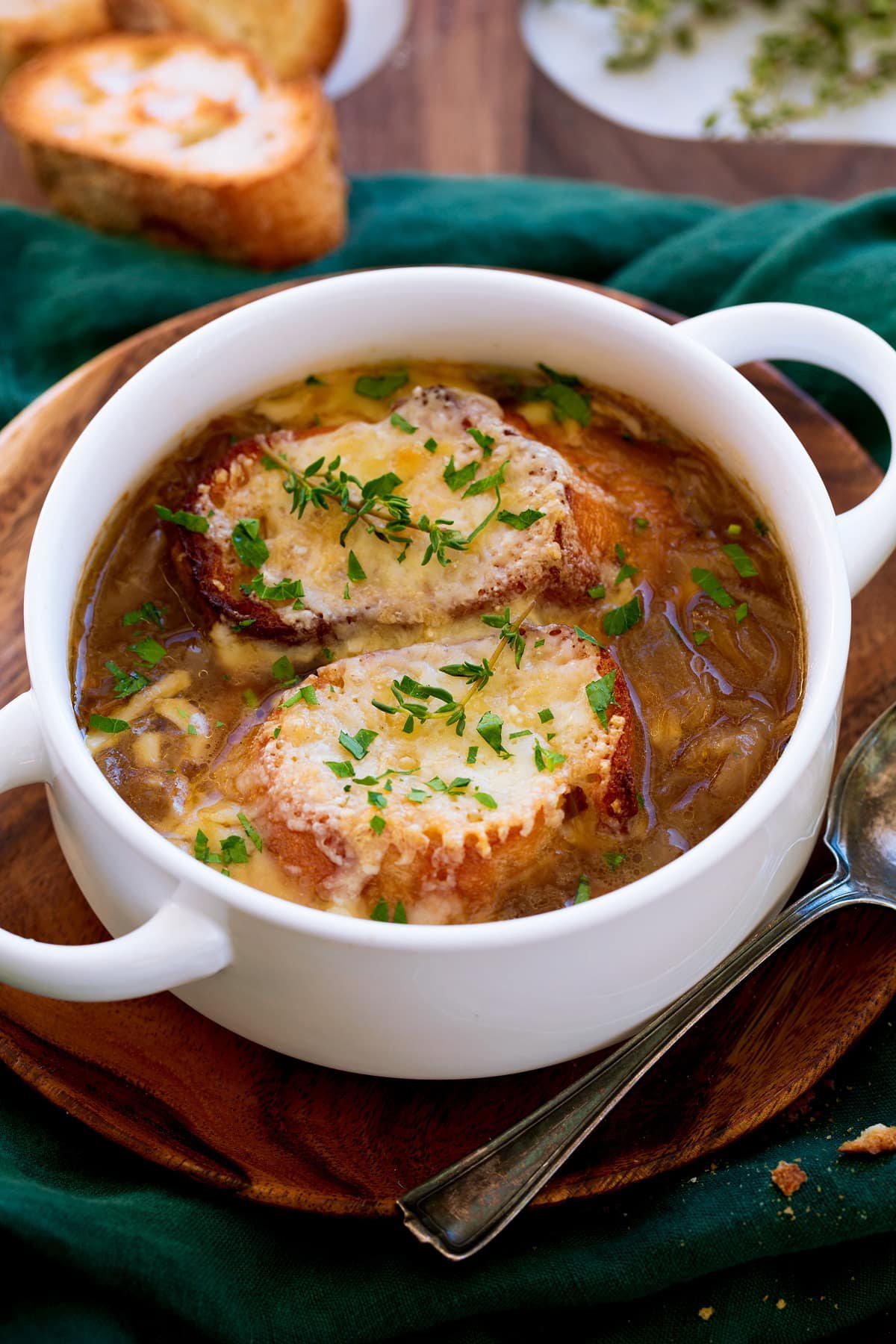
A good french onion soup recipe is built on a surprisingly short ingredient list. The real work happens in the onions. They need time to soften slowly, release their moisture, and develop a deep golden-brown color before they are combined with broth and finished with toasted bread and melted cheese.
The result is far more than a simple onion soup. Properly caramelized onions give the broth sweetness and depth, while beef stock adds savory richness. A slice of crisp bread and a layer of bubbling Gruyère on top turn the soup into a satisfying meal.
This version keeps the technique straightforward enough for a home kitchen while preserving the characteristics that make French onion soup so popular.
What Is French Onion Soup?
French Onion Soup Recipe is a classic soup made primarily from slowly cooked onions and broth. It is traditionally served hot with toasted bread and a generous layer of melted cheese.
The defining feature is caramelized onions. Unlike quickly sautéed onions, caramelized onions are cooked slowly so their natural sugars develop a darker color and more complex flavor.
The soup is often associated with French cuisine and is commonly served in individual oven-safe bowls. The bread is placed on the surface, covered with cheese, and broiled until the cheese melts and develops browned, bubbling spots.
Why the Onions Matter So Much
The onions are the foundation of this soup. If they are rushed, the finished dish can taste thin, sharp, or simply like broth with onions.
Slow cooking changes the onions in several ways:
- Their water gradually evaporates.
- Their texture becomes soft and almost jam-like.
- Natural sugars become more concentrated.
- Their flavor changes from sharp and raw to sweet, savory, and deeply browned.
You do not need special onions. Yellow onions are an excellent everyday choice, although a mixture of yellow, white, or sweet onions can also work.
The key is patience. Depending on the quantity and your pan, properly caramelizing onions can take around 40–60 minutes.
Ingredients for This French Onion Soup Recipe
For the Soup
- 4 large yellow onions, thinly sliced
- 3 tablespoons unsalted butter
- 1 tablespoon olive oil
- 2 cloves garlic, finely minced
- 1 teaspoon salt, plus more to taste
- 1/2 teaspoon black pepper
- 1 teaspoon fresh thyme leaves, or 1/2 teaspoon dried thyme
- 1/2 cup dry white wine
- 6 cups beef broth or beef stock
- 1 tablespoon Worcestershire sauce, optional
- 1 bay leaf
- 1 tablespoon all-purpose flour, optional
- 1 tablespoon brandy or Cognac, optional
For the Topping
- 4–6 slices crusty French bread or baguette
- 1 1/2 to 2 cups grated Gruyère cheese
- A small amount of Parmesan, optional
The wine and brandy are optional. If you prefer not to use alcohol, simply replace the wine with a little additional broth. The soup will still be flavorful.
Step-by-Step French Onion Soup Recipe
1. Slice the Onions
Peel the onions and slice them thinly from root to stem.
Try to keep the slices reasonably uniform. They do not have to look perfect, but pieces of similar thickness will cook more evenly.
If you dislike strong onion fumes, chill the onions briefly before cutting them and use a sharp knife.
2. Start the Caramelization
Place a large, heavy-bottomed pot or Dutch oven over medium heat.
Add the butter and olive oil. Once the butter melts, add the sliced onions and salt.
At first, the pot may look extremely full. That is normal. Onions contain a lot of water and will shrink substantially during cooking.
Cook for about 10 minutes, stirring occasionally, until the onions begin to soften.
3. Cook the Onions Slowly
Reduce the heat to medium-low and continue cooking.
Stir every few minutes, especially as the onions become darker and begin sticking slightly to the bottom of the pot.
If brown residue develops on the bottom, add a small splash of water and scrape it up with a wooden spoon. Those browned bits contain valuable flavor.
Continue cooking until the onions are deeply golden brown and very soft. This can take another 30–45 minutes.
Do not judge caramelization by the clock alone. Your onions are ready when they have a rich brown color and a concentrated, sweet-savory aroma.
4. Add Garlic and Herbs
Add the minced garlic and thyme during the final minute or two of onion cooking.
Stir continuously so the garlic does not burn.
If you are using flour, sprinkle it over the onions and stir thoroughly. Cook for about one minute. The flour can give the soup slightly more body, but it is not essential.
5. Deglaze the Pot
Pour in the white wine and scrape the bottom of the pot to loosen the browned bits.
Allow the wine to simmer for several minutes.
This step adds acidity and helps balance the sweetness of the onions. If you are skipping wine, use a small amount of broth instead and scrape the bottom well.
6. Add the Broth
Pour in the beef broth.
Add the bay leaf, black pepper, and Worcestershire sauce if using.
Bring the soup to a gentle simmer. Avoid a vigorous boil, which is unnecessary and can make the soup taste less refined.
Reduce the heat and simmer uncovered for approximately 20–30 minutes.
Taste the broth before adding more salt. Different stocks contain very different amounts of sodium.
7. Toast the Bread
While the soup simmers, heat your oven to around 400°F (200°C).
Slice a baguette or other crusty bread into pieces roughly 1/2 to 1 inch thick.
Toast the slices until crisp and lightly browned.
The bread needs enough structure to sit on top of the soup without immediately disappearing into it.
8. Assemble the Bowls
Remove the bay leaf.
Ladle the hot soup into oven-safe bowls placed on a sturdy baking tray.
Put one or two pieces of toasted bread on top of each bowl, depending on their size.
Cover the bread generously with grated Gruyère.
If you enjoy a stronger cheese flavor, add a small amount of Parmesan alongside the Gruyère.
9. Broil Until Golden and Bubbly
Place the bowls under a hot broiler for a few minutes.
Watch them carefully. Cheese can go from beautifully browned to burned surprisingly quickly.
The soup is ready when the cheese is completely melted, bubbling, and lightly browned in spots.
Let the bowls sit for a minute or two before serving. They will be extremely hot.
What Makes French Onion Soup Taste Restaurant-Quality?
The biggest difference is usually not an exotic ingredient. It is technique.
Give the onions enough time
This is the most important step. Pale, barely softened onions will not produce the same depth as deeply caramelized ones.
Use a flavorful broth
A good beef stock provides the savory backbone of the soup. If your broth tastes weak on its own, the final soup will probably taste weak too.
Homemade stock is excellent, but a quality store-bought stock can produce very good results.
Balance sweetness with acidity
Caramelized onions naturally become sweet. Wine or another acidic ingredient can help keep that sweetness from becoming heavy.
Choose the right cheese
Gruyère is a classic choice because it melts smoothly and has a nutty, savory flavor.
Swiss cheese can work as a substitute, while Comté offers a particularly rich alternative.
Toast the bread properly
Soft bread tends to collapse too quickly. A crisp baguette gives the soup a better contrast in texture.
Common Mistakes to Avoid
Cooking the onions over high heat
High heat may brown the outside before the onions have properly softened. It can also cause burning.
Better approach: Use medium heat initially, then lower the heat as the onions become soft.
Walking away from the pot
Caramelization is not completely hands-off. You do not need to stir constantly, but check the pot regularly.
If the bottom becomes too dark, reduce the heat and add a small splash of water.
Adding too much sugar
Some recipes add sugar to speed browning or increase sweetness. It is generally unnecessary.
Well-cooked onions already have plenty of natural sweetness.
Using bland broth
Even perfectly caramelized onions cannot fully rescue a watery or flavorless broth.
Taste the stock before adding it. If it lacks character, consider using a better stock or reducing the soup slightly during cooking.
Using too much cheese
More cheese is not automatically better. A very thick layer can overwhelm the broth and make the dish unnecessarily heavy.
A generous but balanced layer is usually enough.
Expert Tips for Better French Onion Soup
Use a wide pot when possible. More surface area allows moisture to evaporate efficiently, which helps the onions caramelize.
Do not overcrowd the pan unnecessarily. A large amount of onions is fine, but they should have enough room to cook evenly. They will shrink as they cook.
Deglaze more than once if needed. If flavorful brown bits build up during caramelization, a tablespoon or two of water can loosen them before they become burnt.
Make it ahead. The soup itself can be prepared a day in advance. Refrigerate it after cooling and reheat gently when ready to serve.
Keep the bread separate. If preparing leftovers, do not store toasted bread directly in the soup. It will become soggy. Toast fresh bread when reheating.
Taste before serving. Salt levels vary greatly depending on the stock and cheese. Final seasoning should happen near the end.
How to Store and Reheat French Onion Soup
The soup portion can be refrigerated in a covered container for several days.
For the best texture, store the bread and cheese separately.
Reheat the soup gently on the stovetop until steaming hot. Then transfer it to oven-safe bowls, add fresh toasted bread and cheese, and broil just before serving.
You can also freeze the onion-and-broth portion. Leave the bread and cheese out until you are ready to serve it.
Can You Make French Onion Soup Without Wine?
Yes.
Wine contributes acidity and flavor, but it is not essential. Simply replace it with additional beef broth.
For a little extra brightness, you can add a very small amount of vinegar near the end of cooking. Add it cautiously because too much acidity can overpower the soup.
Can You Make It Vegetarian?
Absolutely.
Replace the beef stock with a rich vegetable stock.
Because beef broth contributes substantial savory depth, a vegetarian version benefits from particularly flavorful stock. Mushrooms, caramelized garlic, herbs, and a small amount of soy sauce or Worcestershire-style vegetarian sauce can add extra umami.
Use a vegetarian-friendly cheese if needed.
Frequently Asked Questions
What is the secret to a good French onion soup?
The biggest secret is properly caramelizing the onions. Cook them slowly until deeply golden and soft rather than trying to brown them quickly over high heat.
How long should onions cook for French onion soup?
Plan on roughly 40–60 minutes for the onions, although the exact time varies with the pan, heat level, onion quantity, and desired color. Focus on their appearance and texture rather than a strict timer.
What cheese is best for a French onion soup recipe?
Gruyère is one of the best choices because it melts well and has a rich, nutty flavor. Comté, Swiss cheese, or a Gruyère-Parmesan combination can also work well.
Can I use chicken broth instead of beef broth?
Yes. Chicken broth produces a lighter soup, while beef broth gives the traditional version a deeper, more robust flavor. A combination of beef and chicken broth is another option.
Why is my French onion soup bitter?
Bitterness usually comes from onions or browned bits that have burned rather than caramelized. Keep the heat moderate and scrape the pot frequently enough to prevent dark residue from scorching.
Can I make French onion soup ahead of time?
Yes. Prepare the soup without the bread and cheese, refrigerate it, and reheat it when needed. Add freshly toasted bread and cheese immediately before serving.
What bread should I use?
A crusty baguette is ideal. French bread, sourdough, or another sturdy rustic loaf can also work as long as it becomes crisp enough to hold its shape.
How can I make the soup thicker?
French onion soup is normally brothy rather than thick. If you want slightly more body, a small amount of flour can be cooked with the caramelized onions before adding the liquid.
Final Thoughts
A great french onion soup recipe does not depend on complicated cooking. It depends on doing a few simple things well: caramelizing the onions patiently, using flavorful broth, balancing the sweetness with acidity, and finishing the soup with crisp bread and properly melted cheese.
The onions deserve most of your attention. Once they are deeply browned and soft, the rest of the recipe comes together with relatively little effort.
Serve the soup piping hot on a cold evening, with plenty of toasted bread and bubbling Gruyère. It is a classic for a reason: humble ingredients become something remarkably rich and satisfying when given enough time and care.