
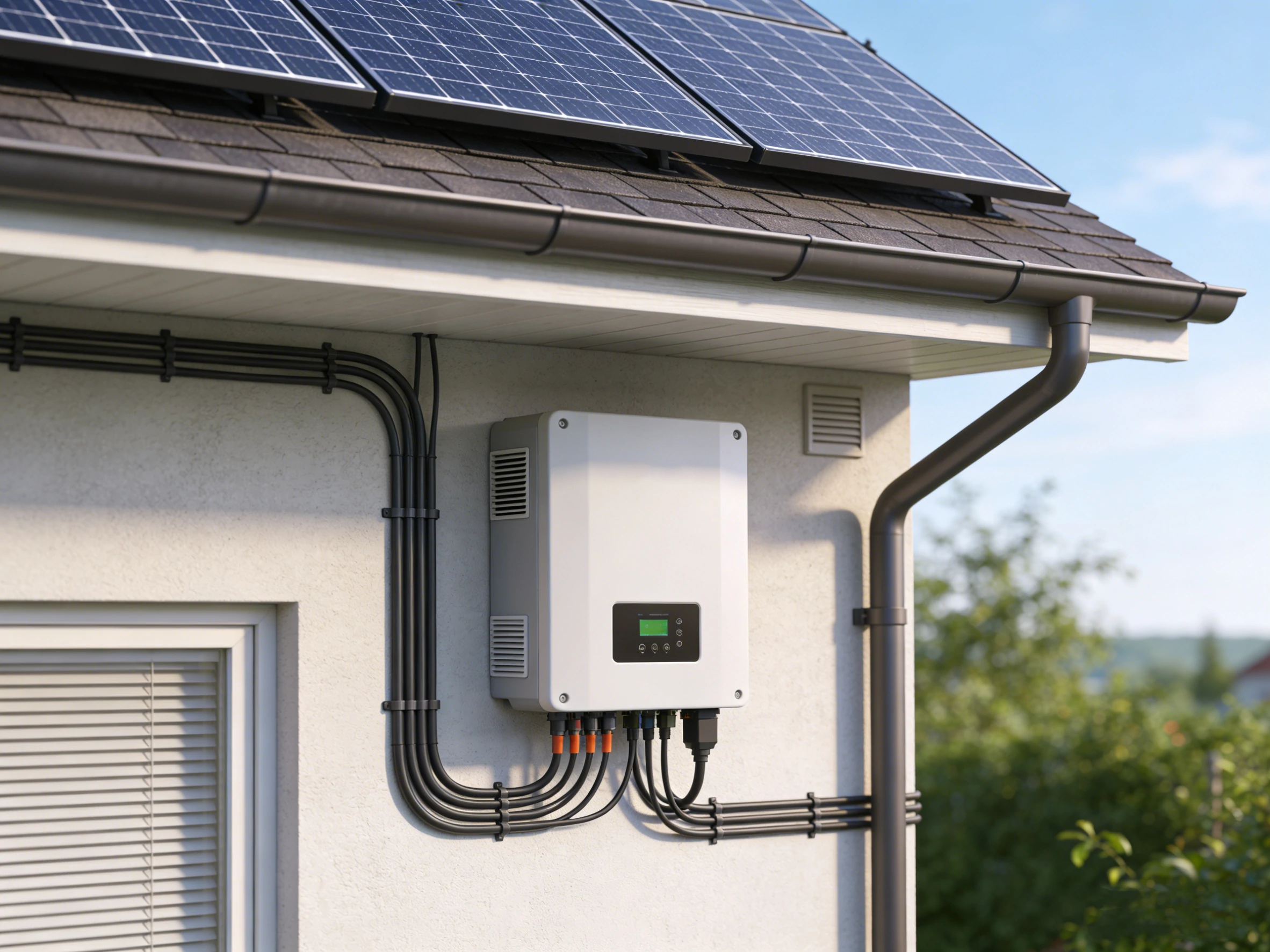
A solar panel produces electricity, but the electricity it generates is not immediately suitable for most appliances. This is where a solar inverter becomes essential. It converts the electricity produced by solar panels into a form that your home or business can use.
Choosing an inverter is not simply about buying the model with the highest power rating. The right choice depends on your solar panel capacity, battery plans, electricity usage, grid connection, available space, and budget.
This guide explains how solar inverters work, the major types available, their advantages and limitations, and the key points to consider before purchasing one.
What Is a Solar Inverter?
A solar inverter is an electronic device that converts DC (direct current) electricity generated by solar panels into AC (alternating current) electricity used by most household and commercial appliances.
Solar panels generate DC power. Your refrigerator, fans, lights, television, computer, and other common appliances generally operate on AC power. The inverter performs the conversion between these two forms of electricity.
Modern inverters can do much more than basic DC-to-AC conversion. Depending on the type, they can monitor solar production, manage batteries, coordinate with the electrical grid, and provide information about system performance.
Why Is an Inverter Necessary?
Imagine your solar panels producing electricity during the afternoon. Without an inverter, that electricity cannot normally be used directly by standard AC appliances.
The inverter makes the electricity usable and helps control how power moves between the solar panels, appliances, battery, and grid.
It can also shut down or limit the system under certain electrical conditions, making proper installation an important part of a safe solar setup.
How Does a Solar Inverter Work?
The basic process is relatively straightforward:
- Solar panels generate DC electricity.
- The inverter receives the DC electricity.
- Electronic circuits convert DC into AC electricity.
- The converted electricity supplies connected appliances.
- Extra electricity can be sent to a battery or, where permitted, the electrical grid.
A modern system may continuously adjust its operation according to solar production and household demand.
For example, if your panels produce 4 kW while your home is using 2 kW, the remaining power may be available for battery charging or export to the grid, depending on the system configuration and local rules.
Types of Solar Inverters
There is no single inverter that is ideal for every solar installation. The main categories have different strengths.
1. String Inverter
A string inverter connects a group, or “string,” of solar panels to one central inverter.
This design is popular because it is relatively simple and can be cost-effective.
Advantages:
- Straightforward installation
- Often lower initial cost
- Easy to understand and maintain
- Suitable for many roofs with consistent sunlight
Limitations:
- Shading on one or more panels can affect the string
- Less flexible when panels face different directions
- A central inverter represents a single major point of failure
String inverters can work particularly well when panels have similar orientations and receive fairly consistent sunlight.
2. Microinverter
A microinverter is installed with an individual solar panel or small group of panels rather than using one central inverter.
This allows panels to operate more independently.
Microinverters can be useful when a roof has multiple orientations, partial shading, or other conditions that make a conventional string configuration less attractive.
Advantages:
- Individual panel-level operation
- Better flexibility for complex roofs
- Useful where shading varies across panels
- Panel-level monitoring may be available
Limitations:
- Higher equipment cost in many installations
- More components installed on the roof
- Maintenance access can be more complicated
3. Hybrid Inverter
A hybrid inverter combines solar and battery-management functions in one system.
It can coordinate electricity from solar panels, batteries, household loads, and sometimes the utility grid.
This makes hybrid systems attractive to homeowners who want energy storage or backup power.
However, not every hybrid inverter provides the same backup capability. Some systems require additional equipment to keep selected circuits operating during a grid outage.
4. Off-Grid Inverter
An off-grid inverter is designed for systems that operate independently of the utility grid.
These systems normally require batteries because solar production changes throughout the day and is unavailable at night.
Off-grid setups are useful for remote locations where grid electricity is unavailable or unreliable, but they require careful system sizing.
5. Grid-Tied Inverter
A grid-tied inverter works alongside the utility electricity network.
During suitable conditions, solar power can supply household loads, while surplus electricity may be exported where local regulations and utility arrangements allow it.
One important point is often overlooked: many standard grid-tied systems shut down during a grid outage.
This happens because the inverter must avoid sending electricity onto a grid that may have been intentionally de-energized for safety or maintenance.
If backup power during outages is important, you need a system specifically designed to provide that capability.
Key Benefits of a Solar Inverter
A quality inverter can influence the overall performance and usability of a solar installation.
Efficient Energy Conversion
The inverter converts the DC electricity from solar panels into AC electricity with relatively high efficiency. However, actual system performance depends on the inverter, panels, temperature, wiring, installation, and operating conditions.
Energy Monitoring
Many modern inverters provide monitoring through a display, website, or mobile application.
You may be able to see:
- Solar production
- Household consumption
- Battery charging and discharging
- Grid imports and exports
- System warnings
This information can help identify unusual performance before it becomes a larger problem.
Battery Integration
If you plan to add batteries now or later, inverter compatibility matters.
Some systems are designed specifically for battery storage, while others may require additional hardware.
Planning for future expansion before purchasing equipment can prevent unnecessary replacement costs.
Backup Power
A suitable inverter and battery system can provide backup electricity during grid interruptions.
But backup capacity is not automatically included with every solar installation. You should determine which appliances you want to operate during an outage and how long you expect the battery to support them.
How to Choose the Right Solar Inverter
Selecting an inverter starts with understanding your actual electricity requirements.
Check Your Solar System Size
Your inverter should be appropriately matched to the capacity and design of your solar array.
Installing an inverter that is too small can restrict the amount of solar energy your system can use. An oversized inverter may increase costs without providing a practical benefit.
The correct design depends on the panel configuration, local conditions, inverter specifications, and applicable installation standards.
Consider Your Roof
Look at how much sunlight different sections of your roof receive.
If all panels face the same direction and receive similar sunlight, a string inverter may be a practical option.
If different sections receive different levels of sunlight or experience partial shading, microinverters or optimizers may deserve consideration.
Decide Whether You Need Batteries
If your main goal is to reduce electricity bills during the daytime, a basic grid-connected system may meet your needs.
If you want to store excess solar electricity for evening use or backup, consider a battery-compatible or hybrid solution.
Don’t buy battery functionality simply because it sounds useful. Storage adds cost and complexity, so it should match your actual electricity usage and backup requirements.
Think About Power During Outages
Ask the installer a specific question:
“What will continue running if the grid goes off?”
The answer depends on the inverter, battery, backup configuration, and electrical installation.
You may want only essential loads such as lights, fans, internet equipment, and a refrigerator. Alternatively, you may want a larger backup system capable of handling heavier loads.
These requirements can significantly change the system design.
Check Monitoring Features
A useful monitoring system can make it easier to understand whether your installation is operating normally.
Don’t focus only on how attractive an app looks. Check what information it actually provides and whether you can access historical production and fault information.
Compare Warranty and Support
Solar equipment can operate for many years, so after-sales support matters.
Before purchasing, check:
- Product warranty
- Installation warranty
- Availability of replacement parts
- Local technical support
- Installer experience
- Warranty claim process
A slightly cheaper inverter may not be the better deal if reliable support is difficult to obtain.
Common Solar Inverter Mistakes
Choosing Only by Price
The cheapest inverter is not necessarily the best value.
A system should be evaluated based on performance, compatibility, warranty, serviceability, and the quality of the installation.
Ignoring Shading
A roof may look sunny from ground level but still have shadows from trees, walls, neighboring buildings, or rooftop equipment.
Shading should be assessed before deciding on the inverter architecture.
Buying Without Checking Compatibility
Solar panels, batteries, inverters, and electrical equipment need to work together.
Don’t assume that any battery can simply be connected to any hybrid inverter.
Check manufacturer compatibility information and have the complete system designed as one package.
Expecting Every Solar System to Work During a Blackout
This is one of the most common misunderstandings.
A standard grid-tied solar system may turn off when the utility grid fails. If blackout protection matters, specifically request a backup-capable design.
Oversizing the System Without a Plan
Adding more solar panels can be useful, but the inverter and electrical system must support the planned configuration.
Future expansion should be considered before installation rather than treated as an afterthought.
Solar Inverter Maintenance Tips
Solar inverters generally don’t require the same type of routine maintenance as an engine or generator, but they should still be monitored.
Keep the area around the inverter clean and adequately ventilated. Avoid covering ventilation openings or installing the unit somewhere exposed to inappropriate levels of heat, moisture, or dust.
Check the monitoring system periodically for unusual warnings or sudden changes in production.
If the inverter displays a serious fault, don’t open the unit yourself. Electrical equipment can contain dangerous voltages even after the system has stopped operating.
Instead, contact a qualified installer or technician.
How Long Does a Solar Inverter Last?
The useful life of an inverter depends on its design, operating environment, installation quality, maintenance, and other factors.
Inverters also contain electronic components that can experience thermal and electrical stress over time.
This is one reason the warranty period and availability of local service should be considered alongside the initial purchase price.
Solar panels may remain productive for decades, but that does not mean every electronic component in the system will have the same lifespan.
Solar Inverter vs Solar Panels: What’s the Difference?
Solar panels generate electricity, while the inverter converts and manages that electricity for use by the electrical system.
Think of the panels as the electricity-producing part of the system and the inverter as the equipment that makes their output compatible with the rest of the electrical installation.
Both are important. High-quality panels cannot compensate for an incorrectly designed inverter system, and a sophisticated inverter cannot make poorly positioned or damaged panels perform beyond their capabilities.
Is a Solar Inverter Worth It?
For a properly designed solar power system, an inverter is essential rather than an optional accessory.
The more important question is which type and capacity are appropriate for your needs.
A homeowner with a simple, unshaded roof and daytime electricity consumption may have different requirements from someone who wants battery storage, backup power, or a system with panels facing several directions.
The best approach is to start with your electricity usage and installation conditions rather than starting with a particular inverter brand.
Frequently Asked Questions
What does a solar inverter do?
A solar inverter converts DC electricity generated by solar panels into AC electricity that can normally be used by household and commercial electrical equipment.
Which solar inverter is best for a home?
There is no universal best option. A string inverter can suit a straightforward roof, while microinverters may be useful for complex or shaded roofs. A hybrid inverter can be appropriate when battery storage or backup power is part of the plan.
Can a solar inverter work without batteries?
Yes. Many grid-connected solar systems operate without batteries. The solar electricity is used by connected loads, while surplus electricity may be exported to the grid if the system and local regulations allow it.
Does a solar inverter work during a power outage?
Not necessarily. Many standard grid-tied systems shut down when the grid fails. A backup-capable inverter and suitable battery or electrical configuration may be required for power during an outage.
How do I size a solar inverter?
Sizing depends on your solar array, panel configuration, expected production, electrical loads, inverter specifications, and local installation requirements. A qualified solar professional should evaluate the complete system rather than choosing an inverter based only on the panel’s total wattage.
Can I add batteries later?
Sometimes. It depends on the inverter architecture and whether the existing equipment supports battery integration. If you expect to add batteries later, discuss that requirement before installing the original system.
Is a hybrid solar inverter better than a normal inverter?
A hybrid inverter isn’t automatically better. It offers additional battery-management capabilities, but those features may not be necessary for a simple grid-connected installation. The right choice depends on how you intend to use the system.
How can I choose a reliable solar inverter?
Compare the inverter’s technical specifications, warranty, monitoring features, compatibility, service support, installation requirements, and reputation. Also consider whether qualified technicians are available to support the system in your area.
Final Thoughts
A solar inverter is one of the most important components of a solar power system. It does more than convert electricity from DC to AC; depending on the system, it can also manage batteries, monitor production, interact with the grid, and provide backup functionality.
The right choice depends on your roof, solar capacity, electricity usage, shading, battery plans, and backup requirements. Instead of choosing an inverter purely by price or brand name, look at the complete system and how you expect to use it for years to come.
A properly matched inverter can help your solar installation operate efficiently and reliably, while a poorly matched one can limit the benefits of an otherwise good solar setup.
FAQ Section
- What does a solar inverter do? — It converts DC electricity from solar panels into AC electricity used by most appliances.
- Can solar panels work without an inverter? — They can generate DC electricity, but a conventional household solar system normally requires an inverter to use that electricity with AC appliances.
- Can a solar inverter work without a battery? — Yes, many grid-connected systems operate without batteries.
- Will solar power work during a blackout? — Not automatically. Backup functionality requires compatible equipment and system design.
- Which inverter is best for a home? — The appropriate type depends on roof layout, shading, solar capacity, battery plans, and backup requirements.
- How long does an inverter last? — Its service life varies according to the model, environment, installation, and operating conditions.
- Should I buy a hybrid inverter? — Consider one if battery storage or backup power is part of your current or future plan.
- What should I check before buying an inverter? — Check capacity, compatibility, warranty, monitoring, support, installation requirements, and future expansion options.