

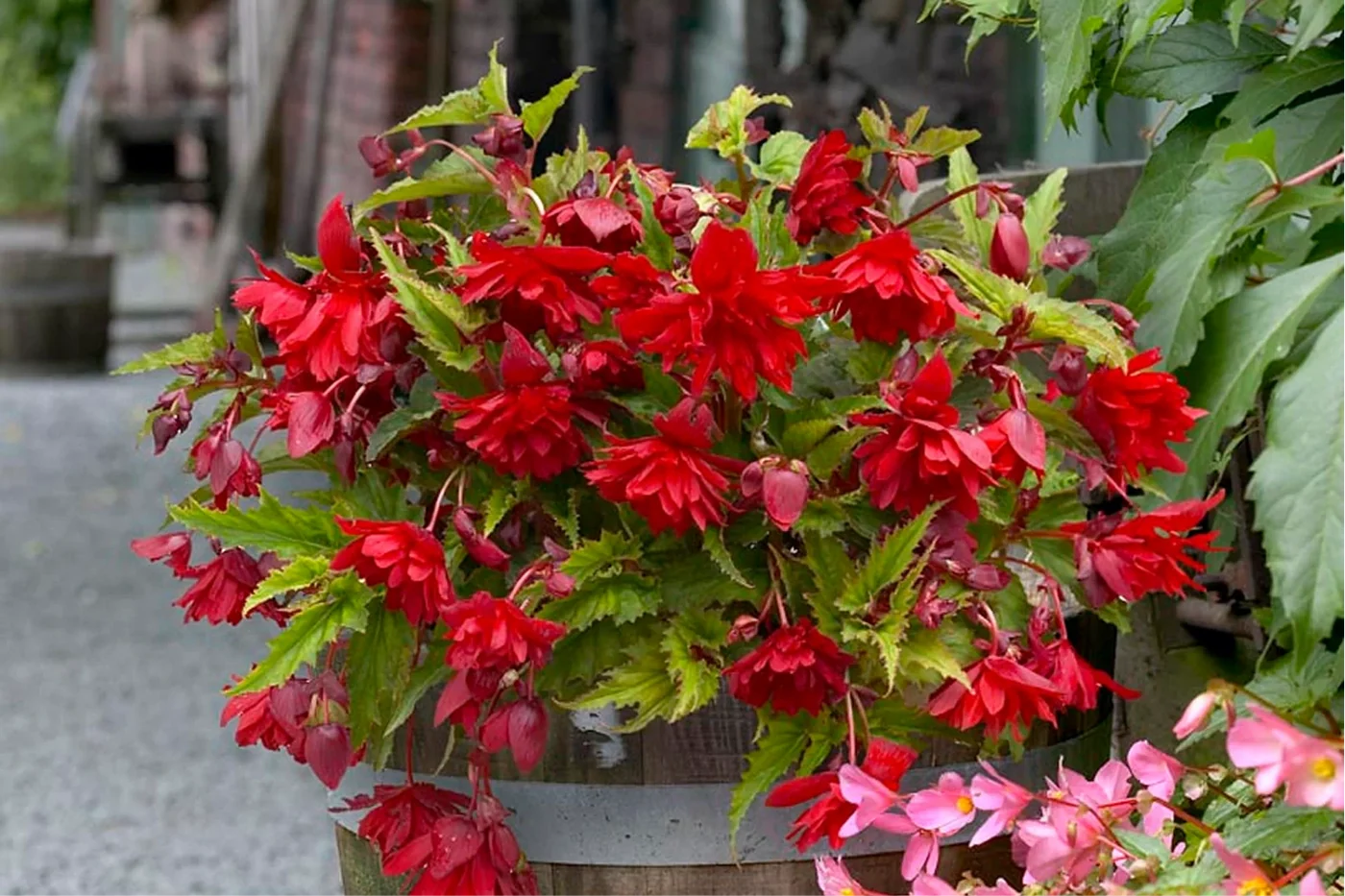
Begonia is one of those plants that can fit into almost any gardening style. Some varieties are grown for colorful flowers, while others are prized for striking leaves in shades of green, silver, red, pink, or deep bronze. They can brighten a windowsill, balcony, patio, garden bed, or shaded corner with relatively little effort when their basic needs are understood.
The challenge is that begonia is not just one type of plant. The name covers a very large group with different growth habits and care requirements. A flowering wax begonia, for example, may handle conditions differently from a rex grown mainly for its foliage.
Understanding the type of begonia you have is therefore the best starting point. From there, light, watering, soil, humidity, temperature, and feeding become much easier to manage.
What Is a Begonia?
Begonias belong to the genus Begonia, a large group of flowering plants known for their varied foliage and attractive blooms. They are grown as houseplants, outdoor ornamentals, container plants, and bedding plants.
One reason begonias are so popular is their variety. Some stay relatively compact, while others develop into larger plants. Certain types produce abundant flowers, whereas others are selected primarily for decorative leaves.
Common groups include:
- Wax begonias: Compact plants often grown for their flowers and useful as bedding or container plants.
- Rex begonias: Best known for colorful, patterned foliage rather than flowers.
- Tuberous begonias: Valued for large, showy flowers and often grown in containers.
- Cane begonias: Recognizable by upright stems and often attractive clusters of flowers.
- Rhizomatous begonias: Frequently grown for unusual foliage and interesting growth patterns.
- Fibrous-rooted begonias: A broad group that includes several popular flowering varieties.
Because these groups differ, a care method that works perfectly for one begonia may cause problems for another.
Why Begonias Are Popular
Begonia offer something that many ornamental plants cannot: both foliage and flowers can provide strong visual interest.
Flowering varieties can add color for much of the growing season when conditions are suitable. Foliage-focused varieties, meanwhile, can remain attractive even when they are not blooming.
They are also versatile. Depending on the species and climate, can be grown:
- Indoors near a bright window
- In hanging baskets
- In pots on balconies
- In shaded outdoor areas
- In garden beds
- As seasonal bedding plants
Their adaptability makes them especially useful for spaces where intense direct sunlight is limited.
Choosing the Right Begonia
Before buying a plant, think about where you want to grow it.
If you want colorful flowers, look for a flowering variety suited to your climate. If your main goal is decorative foliage, rex and other foliage begonias may be more appealing.
Also consider how much sunlight your location receives.
A bright room with filtered light can be suitable for many indoor begonias. A location exposed to strong afternoon sun may be too harsh for varieties with delicate leaves.
When purchasing a plant, inspect the leaves carefully. Avoid specimens with extensive yellowing, mushy stems, widespread spotting, or signs of pests. A healthy plant should have firm growth and leaves appropriate to its variety.
How Much Light Does Begonia Need?
Light requirements vary between varieties, but many begonias perform well in bright, indirect or filtered light.
Indoor plants can often be placed near an east- or west-facing window, provided strong sunlight is filtered when necessary. A sheer curtain can help reduce the intensity of direct rays.
Too little light can lead to weak, stretched growth and fewer flowers. On the other hand, intense direct sunlight can scorch leaves, particularly on varieties with delicate or highly patterned foliage.
Watch the plant rather than relying only on a fixed schedule. Pale, stretched growth can indicate insufficient light, while bleached or crispy patches may suggest excessive exposure.
How to Water a Begonia
Watering is one of the most important parts of begonia care.
The goal is to provide consistent moisture without leaving the roots sitting in saturated soil.
Before watering, check the surface and upper portion of the potting mix. If it has begun to dry, water thoroughly until excess moisture drains from the bottom of the container.
Then allow the plant to drain properly.
Avoid letting the pot stand in a saucer full of water for long periods. Constantly wet conditions can reduce oxygen around the roots and increase the risk of root problems.
At the same time, allowing a begonia to become severely dry over and over can cause wilting, leaf damage, and poor growth.
The correct watering frequency depends on the plant, pot size, soil, temperature, humidity, and light.
What Soil Is Best for Begonia?
Begonias generally benefit from a loose, well-draining growing medium.
A good potting mix should retain some moisture while still allowing excess water to move away from the roots. Dense garden soil can be problematic in containers because it may become compacted and drain poorly.
For container-grown begonias, a quality houseplant or general-purpose potting mix can work well. Adding an appropriate drainage material may improve the structure if the original mix holds too much water.
The container itself also matters. A pot with drainage holes is much safer than a decorative container that traps water around the roots.
Temperature and Humidity
Most begonias prefer warm, stable conditions rather than sudden temperature changes.
Protect indoor plants from cold drafts, heating vents, and strong blasts of air conditioning. Outdoor plants may need additional protection when temperatures become unsuitable for their particular variety.
Humidity can also influence performance, especially for tropical foliage begonias.
However, simply keeping leaves constantly wet is not a reliable solution. Poor airflow combined with persistently damp foliage can encourage fungal and bacterial problems.
Good air circulation, appropriate watering, and reasonable humidity usually provide a better environment than trying to create extremely humid conditions.
How to Fertilize Begonia
Begonias can benefit from regular feeding during active growth, particularly when they are producing new leaves or flowers.
A balanced fertilizer used according to its label instructions is generally a practical choice. Avoid assuming that more fertilizer will produce a healthier plant.
Excess fertilizer can build up in the growing medium and damage roots. If a plant is already stressed by poor light, waterlogging, pests, or disease, adding more fertilizer is unlikely to solve the underlying problem.
Healthy growing conditions should come first.
Pruning and Grooming
Regular grooming can help a begonia maintain a neat appearance.
Remove dead or badly damaged leaves with clean tools. Spent flowers can also be removed when appropriate, especially if you want the plant to direct its energy toward new growth.
Some varieties benefit from pruning when they become leggy or uneven. Where possible, make clean cuts just above a suitable growth point.
Avoid removing large amounts of healthy growth at once unless the specific variety responds well to hard pruning.
How to Propagate Begonia
Many begonias can be propagated from cuttings, although the exact method depends on the variety.
Stem cuttings are commonly used with suitable types. A healthy section of stem can be placed in an appropriate propagation medium and kept under suitable moisture and humidity until roots develop.
Some foliage begonias can also be propagated from leaves or sections of leaves.
Propagation is not equally successful with every begonia, so identifying the variety before choosing a method can save considerable frustration.
Common Begonia Problems
Yellow Leaves
Yellowing can have several causes.
Overwatering is a common possibility, especially when the soil remains wet for long periods. Older leaves naturally turning yellow is less concerning.
Check the roots, soil moisture, drainage, and light before changing your watering routine.
Brown or Crispy Leaves
Brown edges can result from underwatering, very dry air, excessive fertilizer, strong sunlight, or root problems.
Look at the entire growing environment rather than assuming there is one universal cause.
Drooping
A drooping begonia may need water, but not always.
Plants can also droop when their roots are damaged by excessive moisture. Check the soil before adding more water.
Pests
Begonias can occasionally attract pests such as aphids, mealybugs, spider mites, thrips, or other sap-feeding insects.
Inspect the undersides of leaves and areas around new growth regularly. Early detection usually makes pest management much easier.
Fungal Problems
Persistent wet foliage, poor airflow, and excessive moisture can create favorable conditions for fungal diseases.
Give plants adequate space, avoid unnecessary overhead watering, remove badly affected material, and improve airflow around the plant.
Common Begonia Care Mistakes
One of the biggest mistakes is treating every begonia exactly the same way.
Other common problems include:
- Overwatering on a fixed schedule rather than checking the soil.
- Using containers without drainage holes.
- Putting shade-loving varieties in intense afternoon sunlight.
- Keeping foliage constantly wet.
- Fertilizing a stressed plant too heavily.
- Ignoring early signs of pests.
- Choosing a plant without considering the growing location.
Good care is less about following a rigid calendar and more about observing what the plant is telling you.
Expert Tips for Healthier Begonias
Start with the growing environment instead of trying to correct problems after they appear.
Choose a variety that naturally suits your available light. Use a well-draining container. Water according to the plant’s actual conditions rather than a universal timetable.
It is also useful to rotate indoor plants occasionally so that growth remains reasonably even.
When a begonia suddenly looks unhealthy, change one factor at a time where possible. If you move the plant, change its watering and apply fertilizer simultaneously, it becomes harder to determine what actually helped.
Finally, remember that some leaf damage is not automatically a sign of serious disease. A single damaged leaf can result from age or minor environmental stress. Look for patterns and changes in new growth.
Frequently Asked Questions About Begonia
Is begonia easy to grow?
Many begonias are relatively easy to grow when their light, watering, and drainage needs are met. Difficulty varies considerably between varieties.
Does begonia need full sun?
Most begonias do not need strong full sun. Many prefer bright filtered or indirect light, although specific varieties can have different requirements.
How often should I water a begonia?
There is no universal schedule. Check the growing medium and water when it has begun to dry appropriately for your variety. Avoid keeping the roots constantly saturated.
Can begonia grow indoors?
Yes. Many begonias can grow successfully indoors when they receive suitable bright, indirect light and have good drainage.
Can begonia grow from a cutting?
Many types can be propagated from cuttings. Stem cuttings are commonly used for suitable varieties, while some foliage begonias can be propagated from leaves or leaf sections.
Why are my begonia leaves turning yellow?
Yellow leaves may result from excessive moisture, insufficient light, natural aging, root problems, or other environmental stress. Check the soil and growing conditions before changing your care routine.
Is begonia safe for pets?
Some begonias contain compounds that can cause irritation or illness if pets chew or ingest them. If you have pets that regularly nibble plants, check the specific begonia variety and keep questionable plants out of reach.
Can begonia survive winter?
That depends on the species and local climate. Tender begonias may need to be brought indoors or protected from cold conditions, while some types have different seasonal behavior.
Final Thoughts
A begonia can be a rewarding plant for both indoor and outdoor growing, but success starts with recognizing that different varieties have different needs. Light, drainage, careful watering, suitable temperatures, and regular observation are more important than following a rigid care schedule.
If you are choosing your first plant, select a variety that matches your available growing conditions rather than choosing purely for appearance. Once the environment is right, routine care becomes much simpler.
The best approach is straightforward: give the plant appropriate light, avoid waterlogged soil, watch for pests and stress, and adjust your care based on how the plant responds.