
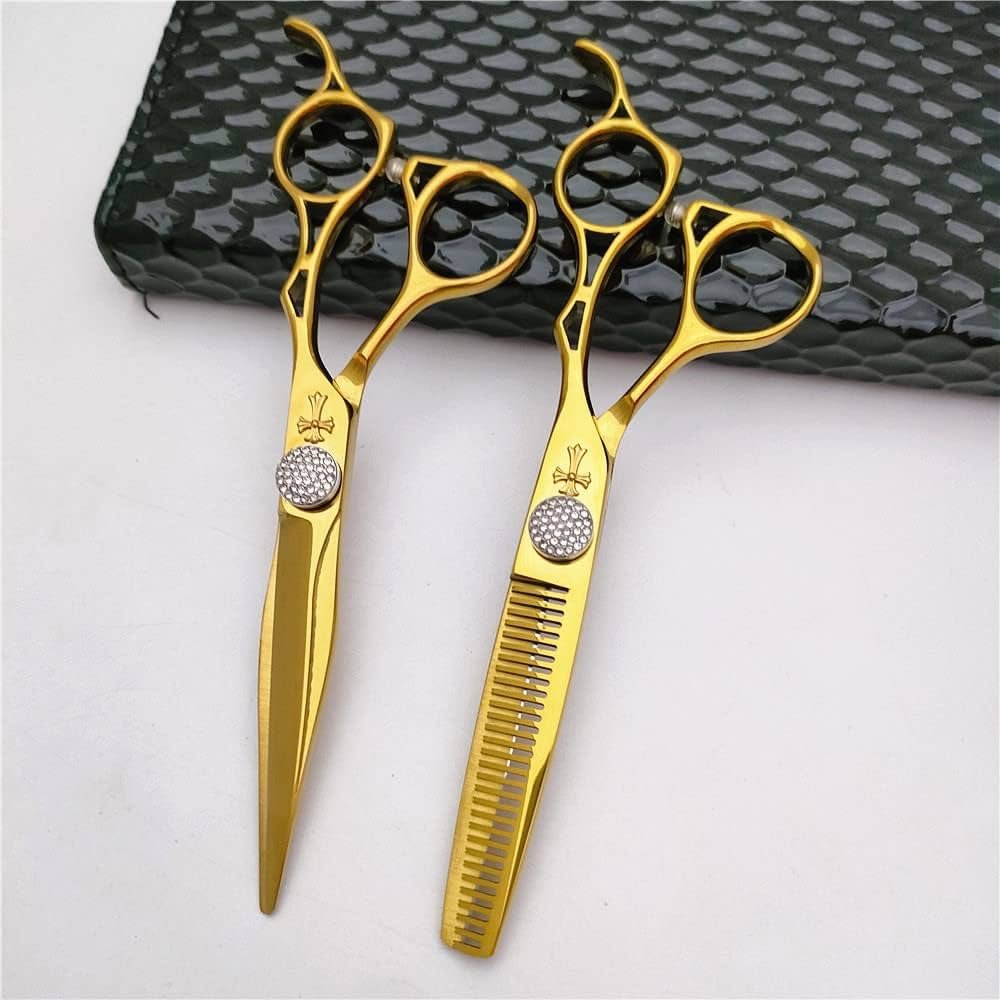
The right Hair Cutting Scissors can make a noticeable difference in how clean, controlled, and comfortable a haircut feels. A good pair should glide through hair instead of pulling it, fit naturally in your hand, and give you enough control to make precise cuts.
But choosing scissors is not simply a matter of finding the sharpest or most expensive pair. Different scissors are designed for different techniques, hair types, and levels of experience. Professional stylists may use several pairs during a single appointment, while someone cutting hair at home usually needs one dependable all-purpose pair.
This guide explains what to look for, how different designs work, common mistakes to avoid, and how to keep your scissors performing properly.
What Are Hair Cutting Scissors?
Hair cutting scissors are specialized shears designed specifically for cutting human hair. They generally have sharper, more precise blades than ordinary household scissors.
Although the terms scissors and shears are often used interchangeably, professional hair shears can have different blade shapes, handle designs, lengths, and tension systems depending on their intended use.
A typical pair consists of:
- Two blades: The cutting edges meet to slice through hair.
- Finger holes: These provide control and stability.
- Finger rest: Often found on professional models to support the hand.
- Pivot screw: Connects the blades and allows them to open and close smoothly.
- Tension system: Controls how tightly the blades move against each other.
The blade design matters because hair needs to be cut cleanly. A dull or poorly aligned blade may bend, fold, or push hair away instead of making a clean cut.
Why the Right Scissors Matter
Hair cutting is a precision task. Even a small difference in blade quality or handle design can affect control.
Cleaner cuts
Sharp, properly maintained blades can produce cleaner cuts with less need to repeatedly pass over the same section.
Better control
The correct size and handle shape make it easier to control small movements. This is especially useful when working around the ears, neckline, bangs, or other detailed areas.
Less hand fatigue
A pair that fits your hand comfortably can reduce unnecessary finger and wrist movement. This becomes particularly important for professional stylists who use scissors throughout the day.
More consistent results
When the blades open and close smoothly, you can maintain a steady cutting rhythm rather than compensating for sticking or uneven movement.
Types of Hair Cutting Scissors
Not every pair is intended for the same technique. Understanding the major types makes choosing much easier.
Straight-Blade Cutting Scissors
These are the standard scissors used for many basic cutting techniques. They have relatively straight cutting edges and are suitable for creating clean lines and general shaping.
For someone purchasing their first professional-quality pair, a straight-blade model is usually the most versatile starting point.
Convex-Blade Scissors
Convex blades have a smooth, curved cutting edge and are commonly associated with high-quality professional shears.
They can provide a very smooth cutting action, but they also require appropriate maintenance and technique. They are often favored for precision work.
Serrated or Micro-Serrated Scissors
These blades have very fine teeth or a textured edge. The texture can help grip hair rather than allowing it to slide along the blade.
They can be useful for certain cutting techniques, particularly when additional control is desired.
Thinning Scissors
Thinning scissors have teeth on one or both blades. Instead of removing a solid section of hair like standard cutting shears, they remove selected strands as the blades close.
They are commonly used to reduce bulk or soften transitions.
Thinning scissors should not automatically be considered a better choice for thick hair. Removing too much hair can create unwanted texture or make the ends look uneven.
How to Choose Hair Cutting Scissors
The best pair depends on who will use them and what type of cutting they will perform.
1. Consider the Size
Scissors are available in several lengths. Smaller sizes can provide excellent control for detailed work, while longer shears can cover more hair with each movement.
For general use, a medium-length pair is often easier to handle than an extremely short or long model.
Professional stylists may choose different sizes based on their cutting technique.
2. Pay Attention to Handle Design
Handle shape affects comfort and control.
Common designs include:
- Symmetrical handles
- Offset handles
- Ergonomic handles
- Swivel-thumb designs
An offset or ergonomic handle may reduce the amount of wrist bending required for some users. A swivel thumb can provide additional freedom of movement.
There isn’t one handle style that is universally best. Hand size, technique, and personal comfort all matter.
3. Check the Blade Quality
Look for blades that meet smoothly and move consistently.
A quality pair should not feel rough, scratchy, or loose when opening and closing.
Avoid choosing scissors based solely on appearance. A shiny finish or attractive handle does not necessarily indicate good cutting performance.
4. Think About Your Cutting Technique
Someone who mainly performs blunt cuts has different needs from a stylist who frequently uses point cutting, slide cutting, or other texturizing techniques.
Before buying, think about what you actually plan to do with the scissors.
5. Consider Hair Type
Hair thickness, density, texture, and condition can influence the type of shears that feel most effective.
However, there is no single pair that is automatically perfect for every hair type. Technique and blade condition remain important.
6. Don’t Ignore Balance
Good scissors should feel balanced in your hand rather than excessively heavy toward the blade or handle.
A balanced pair allows controlled movement and can feel more comfortable during longer cutting sessions.
How to Use Hair Cutting Scissors Properly
Even excellent scissors cannot compensate for poor technique.
Step 1: Prepare the Hair
Hair should be prepared according to the cutting method. Depending on the style, it may be clean, damp, or dry.
Use appropriate sectioning so you aren’t trying to control too much hair at once.
Step 2: Hold the Scissors Correctly
Place your thumb in the appropriate finger hole and your ring finger in the other. Keep your hand relaxed rather than squeezing the handles tightly.
The thumb should generally perform most of the opening-and-closing movement.
Step 3: Work in Small Sections
Small, controlled sections make it easier to maintain consistent length.
Use clips to separate hair that isn’t currently being cut.
Step 4: Keep the Blades Moving Smoothly
Avoid forcing the scissors through hair.
If the blades are pulling or snagging, stop and check the scissors. They may need cleaning, adjustment, sharpening, or professional servicing.
Step 5: Check the Result
After cutting a section, compare it with neighboring sections. Good sectioning and consistent technique are often more important than making rapid cuts.
Common Mistakes to Avoid
Using Household Scissors
Kitchen, craft, or office scissors are not designed for hair. Their blades may not provide the precision needed for clean cutting.
Using them can also make detailed work more difficult.
Cutting With Dull Blades
A dull pair may require more force and can produce inconsistent results.
If the scissors no longer cut as smoothly as they once did, maintenance may be necessary.
Over-Tightening the Screw
More tension does not automatically mean better cutting.
If the tension is too tight, the scissors may feel stiff and uncomfortable. If it is too loose, the blades may not work correctly together.
Adjust according to the manufacturer’s design rather than simply tightening the screw as much as possible.
Cutting Other Materials
Hair scissors should generally be reserved for hair.
Cutting paper, plastic, fabric, tape, or other materials can affect the cutting edges and shorten the useful life of the blades.
Dropping the Scissors
A fall can knock the blades out of alignment even if there is no obvious damage.
Professional shears should be handled carefully and stored securely when not being used.
How to Maintain Hair Cutting Scissors
Proper maintenance can help preserve cutting performance.
Clean Them Regularly
Remove hair and product residue after use. Follow the manufacturer’s instructions for cleaning, especially if the scissors have a specialized finish.
Keep Them Dry
Moisture can contribute to corrosion or other damage, particularly on metal components.
Dry the scissors thoroughly after cleaning.
Lubricate the Pivot
Some professional scissors benefit from occasional lubrication around the pivot area. Use a lubricant recommended for hair shears and avoid applying excessive amounts.
Store Them Safely
Keep scissors in a protective case or designated storage area. Don’t leave them loose in a drawer where the blades can hit other objects.
Have Them Professionally Sharpened
When sharpening becomes necessary, use a qualified shear sharpener familiar with professional hair-cutting tools.
Improper sharpening can alter the blade geometry and affect how the scissors perform.
Hair Cutting Scissors vs. Thinning Scissors
These two tools are often confused.
Regular cutting scissors remove the hair between their blades. They are used to create length, shape, and clean lines.
Thinning scissors have teeth that remove selected strands while leaving some hair untouched.
For example, if someone has very dense hair, a stylist may use texturizing or thinning techniques to reduce bulk. But using thinning scissors incorrectly can create excessive texture, unevenness, or unwanted short pieces.
They should be treated as specialized tools rather than a replacement for standard cutting shears.
How Often Should Hair Scissors Be Sharpened?
There is no universal sharpening schedule.
Frequency depends on:
- How often the scissors are used
- The type of hair being cut
- Blade material
- Cutting technique
- Maintenance habits
- How the scissors are stored
Instead of sharpening according to a fixed calendar, pay attention to performance.
If the scissors begin folding or pushing hair, feel rough during movement, or require noticeably more effort, have them inspected.
Professional vs. Home Hair Scissors
A professional stylist may justify investing in multiple high-quality pairs because scissors are a daily working tool.
For occasional home use, however, buying the most expensive professional model isn’t necessarily necessary.
A sensible home pair should have:
- Sharp, reliable blades
- Comfortable handles
- Appropriate size
- Adjustable or properly set tension
- Durable construction
- A protective storage solution
The goal is not to buy the most expensive scissors. It’s to buy a pair appropriate for the job.
Expert Tips for Better Scissor Selection
Before purchasing, hold the scissors if possible.
Open and close them several times. Notice whether the movement feels smooth and controlled. Check whether your fingers sit naturally in the handle and whether your wrist remains comfortable.
Also consider maintenance. A high-quality pair that is difficult or expensive to service may not be practical for every user.
Most importantly, don’t confuse sharpness with quality. Blade geometry, alignment, balance, ergonomics, and maintenance all contribute to how a pair performs.
Frequently Asked Questions
What are hair cutting scissors used for?
Hair cutting scissors are designed to cut and shape human hair with greater precision than ordinary household scissors. Different models are designed for different cutting and texturizing techniques.
Can I use regular scissors to cut hair?
It is better to use scissors specifically designed for hair. Household scissors may not provide the same precision and can make clean, controlled cutting more difficult.
What size hair scissors should I buy?
For general use, a medium-length pair is a practical choice. The ideal size depends on your hand, cutting technique, and the type of work you perform.
Are expensive hair scissors better?
Not necessarily. Price can reflect materials, manufacturing, ergonomics, and craftsmanship, but the most expensive pair may not suit your hand or technique. Fit and performance are more important.
How do I know when my hair scissors are dull?
Hair may start pushing, folding, or slipping between the blades instead of being cut cleanly. The scissors may also require more effort than they previously did.
Can hair cutting scissors be sharpened?
Yes. Many professional shears can be professionally sharpened. The sharpening method should match the blade design and construction.
Are thinning scissors the same as hair cutting scissors?
No. Standard cutting scissors are designed to remove hair along a cutting line, while thinning scissors use teeth to remove selected strands and reduce bulk or create texture.
How should I store hair cutting scissors?
Clean and dry them before storage, then place them in a protective case or another secure location where the blades won’t contact other tools.
Final Thoughts
Choosing the right hair cutting scissors comes down to more than sharp blades and an attractive design. Size, balance, handle shape, blade construction, cutting technique, and maintenance all influence the experience.
For most people, a comfortable, well-made pair of standard cutting shears is the best starting point. If you regularly perform specialized techniques, additional tools such as thinning or texturizing scissors may make sense.
Take care of the scissors you buy, use them only for their intended purpose, and have them professionally maintained when necessary. A good pair can remain a dependable tool for years when it is treated properly.