

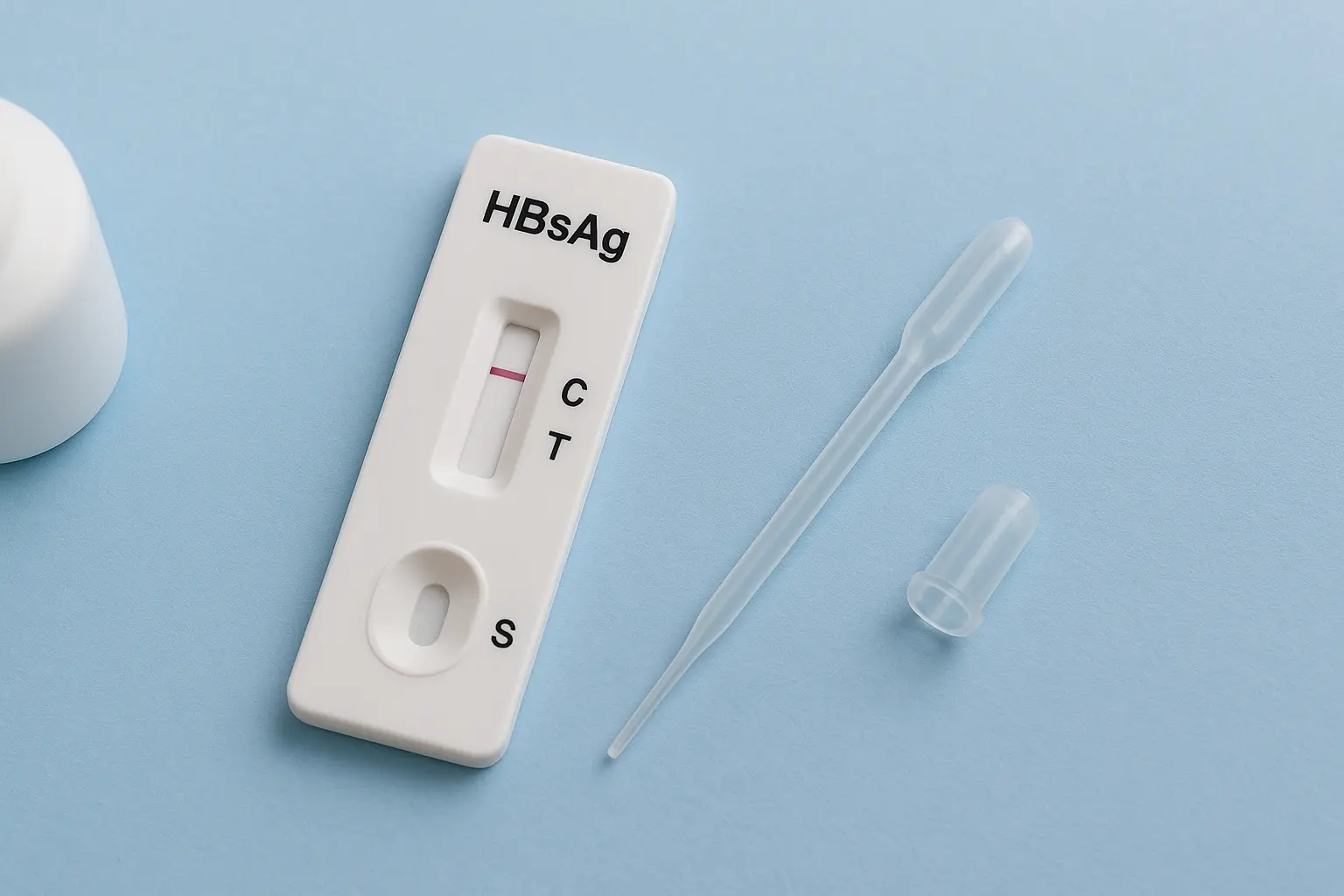
Getting a lab report back with the term “HBsAg” on it can be confusing if nobody explains what it means. Maybe your doctor ordered it as part of a routine checkup, a prenatal panel, or a pre-employment screening, and now you’re staring at a result with no context. This guide breaks down what HBsAg is, why doctors test for it, what a positive or negative result actually tells you, and what steps typically follow either outcome.
What Is HBsAg?
HBsAg stands for Hepatitis B surface antigen. It’s a protein found on the outer shell of the hepatitis B virus (HBV). When this virus infects the liver, it produces large amounts of this surface protein, and that protein circulates in the bloodstream in far greater quantities than the actual virus particles themselves.
That’s exactly why it makes such a useful test. Instead of trying to detect the whole virus directly, labs look for this surface protein because it shows up early and in high concentrations. A blood test that comes back positive for HBsAg means the virus is currently present and active in the body — either as a new infection or a long-term one.
It’s worth separating this from two other terms people often mix up:
- Anti-HBs (hepatitis B surface antibody) — this shows immunity, either from past infection that resolved or from vaccination.
- HBcAb (hepatitis B core antibody) — this indicates past or current exposure to the virus.
HBsAg tells you the virus is there right now. The antibody tests tell you about your immune system’s response to it, past or present.
Why This Test Matters
Hepatitis B affects the liver, and unlike some infections that come and go without much fuss, it can quietly cause damage over years without obvious symptoms. Someone can carry the virus for a decade and feel completely fine, while the liver slowly develops inflammation or scarring in the background.
That’s the main reason HBsAg testing gets built into so many routine screening programs. It’s not there to alarm people — it’s there because early detection genuinely changes outcomes. Catching a chronic infection before it progresses to cirrhosis or liver cancer gives doctors far more options for managing it.
There’s also a public health angle. Hepatitis B spreads through blood and certain body fluids — shared needles, unprotected sex, or from a mother to her baby during childbirth. Knowing your status helps prevent unknowingly passing it to someone else, which is part of why prenatal screening for HBsAg is standard practice in most countries.
Understanding a Positive Result
A positive HBsAg result means the virus is currently active in your system. But “positive” isn’t a single diagnosis — it splits into two very different scenarios depending on timing.
Acute infection. If this is a new infection, HBsAg typically appears within one to nine weeks after exposure, often before any symptoms show up. Many adults with a healthy immune system clear the virus naturally within six months. When that happens, HBsAg eventually disappears from the blood and protective antibodies (anti-HBs) take its place.
Chronic infection. If HBsAg is still detectable after six months, the infection is considered chronic. This is more common in people infected as infants or young children, since a developing immune system is less likely to clear the virus on its own. Chronic hepatitis B doesn’t mean the liver is definitely damaged — some people live with it for years with minimal liver impact — but it does mean ongoing monitoring is necessary, and in many cases, treatment.
One common misconception is that a positive HBsAg result automatically means someone is seriously ill or contagious in an obvious way. In reality, plenty of people with chronic hepatitis B have no symptoms at all and only find out through routine screening. That’s part of what makes the virus tricky to manage on a population level — most transmission happens without anyone realizing.
Understanding a Negative Result
A negative HBsAg result generally means the virus isn’t currently detectable in your blood. This could mean:
- You’ve never been infected.
- You were infected in the past and your body cleared the virus.
- You’re vaccinated and protected.
- You’re in the very early “window period” of a new infection, before the surface antigen has risen to detectable levels.
That last point matters. If someone was exposed to the virus very recently — within the past few weeks — a negative result doesn’t always rule out infection. Doctors sometimes recommend retesting a few weeks later if there was a known recent exposure, just to be safe.
Key Things to Know About HBsAg Testing
It’s a simple blood draw. No special preparation is usually required, and results typically come back within a few days depending on the lab.
It’s often part of a panel, not a standalone test. Doctors frequently order HBsAg alongside anti-HBs and HBcAb together, because looking at all three gives a much clearer picture than any single result on its own.
A positive result needs follow-up testing. One positive HBsAg reading isn’t usually treated as the final word. Doctors typically confirm it with repeat testing and additional markers like HBeAg (which reflects how actively the virus is replicating) and a viral load test (HBV DNA) to assess severity.
Vaccination doesn’t cause a positive HBsAg result. This is a common source of confusion. The hepatitis B vaccine trains your immune system to produce anti-HBs antibodies — it doesn’t introduce the surface antigen itself in a way that would show up on this particular test. If someone tests positive for HBsAg, the vaccine isn’t the explanation.
Common Mistakes People Make
Assuming a positive result is a death sentence. Chronic hepatitis B is manageable. Many people live long, healthy lives with regular monitoring and, when needed, antiviral treatment that keeps the virus suppressed.
Skipping follow-up appointments after a positive test. Because symptoms are often absent, it’s tempting to feel like nothing needs to change. But liver damage from hepatitis B tends to be silent until it’s advanced, which is exactly why consistent monitoring matters more than how someone feels day to day.
Confusing HBsAg with hepatitis A or C markers. These are three separate viruses with different transmission routes, different tests, and different long-term risks. Hepatitis B is bloodborne and sexually transmitted; hepatitis A typically spreads through contaminated food or water; hepatitis C is mainly bloodborne. Mixing them up leads to unnecessary confusion about risk and prevention.
Not informing close contacts or partners. This is sensitive territory, but people with chronic hepatitis B are generally advised to let sexual partners and household members know, since the vaccine can protect them if they haven’t already been exposed.
Practical Recommendations
If your HBsAg result came back positive, the most useful next step is a conversation with a doctor — ideally one experienced in liver health or infectious disease — about additional testing. This usually includes checking viral load, liver enzyme levels, and sometimes an ultrasound to assess the liver’s condition. Treatment decisions depend heavily on these follow-up results, not on the HBsAg result alone.
If it came back negative and you’re not vaccinated, this is a reasonable point to ask about getting the hepatitis B vaccine, especially if your job, travel plans, or personal circumstances put you at higher risk of exposure.
If you’re pregnant, a positive result doesn’t mean your baby will definitely contract the virus. Newborns given the hepatitis B vaccine and, in most cases, an additional antibody injection shortly after birth are highly protected against transmission from an infected mother.
Frequently Asked Questions
Can HBsAg turn negative after being positive? Yes, particularly in acute infections. Many adults clear the virus within six months, at which point HBsAg drops and antibodies appear. In chronic cases, this happens less often but is still possible over time, sometimes with treatment.
Does a positive HBsAg mean I need medication right away? Not necessarily. Treatment decisions depend on viral load, liver enzyme levels, and how active the virus appears to be. Some people with chronic hepatitis B are monitored for years before treatment is recommended, if it’s needed at all.
Is HBsAg testing accurate? It’s considered a reliable screening test, though like any test it can occasionally produce a false positive or a result during the window period after very recent exposure. That’s why doctors usually confirm results with additional testing rather than relying on a single reading.
Can I spread hepatitis B if I have no symptoms? Yes. This is one of the more important facts about the virus — people without symptoms can still transmit it through blood or certain body fluids.
How is HBsAg different from a liver function test? HBsAg detects the virus itself. Liver function tests measure enzymes and other markers that reflect how well the liver is currently working. Someone can have a positive HBsAg with normal liver function tests, or abnormal liver function tests for reasons unrelated to hepatitis B.
Will the vaccine give me a positive HBsAg result? No. The vaccine produces protective antibodies (anti-HBs), not the surface antigen. A positive HBsAg result reflects an actual current infection, not vaccination.
How often should someone with chronic hepatitis B get retested? This varies by individual case, but many doctors recommend monitoring liver function and viral markers every six to twelve months, sometimes more frequently depending on the person’s health and treatment status.
Final Thoughts
Seeing “HBsAg” on a lab report can feel unsettling if you don’t know what it stands for, but the test itself is straightforward: it tells you whether hepatitis B virus is currently present in your blood. A positive result isn’t a verdict — it’s a starting point for further testing and, when appropriate, treatment that can keep the liver healthy for decades. A negative result is reassuring, but doesn’t replace the value of vaccination if you haven’t already had it.